Tag: Weight loss injections UK

Does Wegovy Have a Golden Dose Like Mounjaro? | Guide
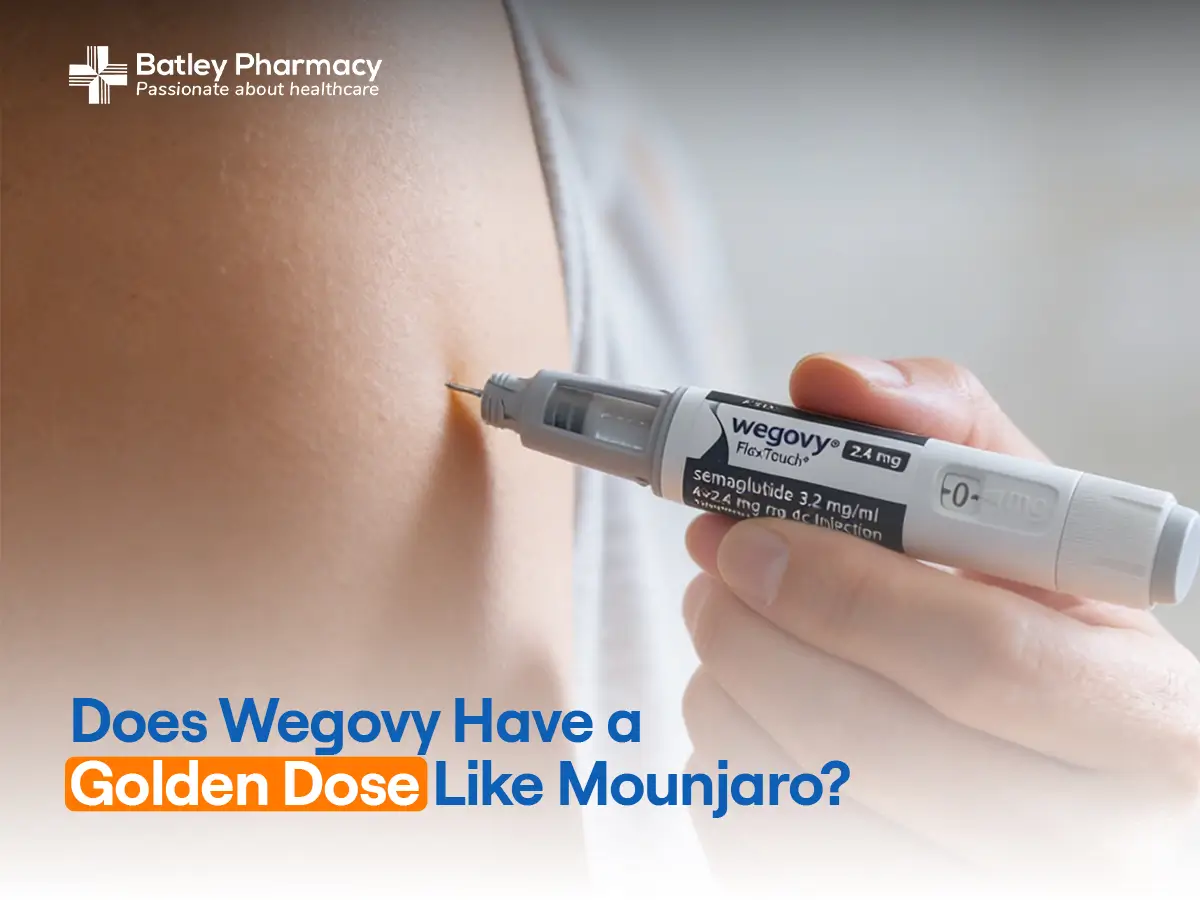
Does Wegovy Have a Golden Dose Like Mounjaro?

As weight loss injections like Wegovy become more popular, so do the myths surrounding how they work. One of the most common claims circulating online is the idea of a so-called “golden dose”, an extra or leftover dose that can be used for additional weight loss benefits, similar to what some people believe happens with Mounjaro. 

This article breaks down where this misconception comes from, explains how Wegovy dosing is actually designed, and separates online speculation from medical fact so you can make informed and safe decisions.

What Is the Golden Dose Myth?

The term “golden dose” is often used online to describe leftover medication in an injection pen, which some people mistakenly believe can provide an extra dose.

  • Leftover medication: Wegovy FlexTouch may contain some liquid after four prescribed injections.
  • No approved fifth dose: The remaining liquid is not accurately measured or authorised for another injection.
  • Potential risks: Extracting leftover medication can cause incorrect dosing and contamination.
  • No universal golden dose: The term may also refer to a supposedly ideal weight loss dose, but no such dose is scientifically established for everyone.

Always follow your individual prescription rather than attempting to use leftover medication or adjust your dose.

Myth vs Fact

MYTH: If liquid remains in a Wegovy pen after the prescribed injections, it can be used as an additional or “golden” dose.

FACT: Current UK Wegovy FlexTouch prescribing information states that the pen contains four prescribed doses. Some solution may remain after all four doses have been administered correctly, but that remaining solution is insufficient for another dose and the pen should be disposed of.

Therefore, visible leftover liquid should not be treated as an authorised fifth dose or extracted to create an additional injection.

Does Wegovy Have a Golden Dose?

The straightforward answer is no. Wegovy (semaglutide) does not have a golden dose. The medication follows a carefully designed titration schedule developed through rigorous clinical trials to maximise efficacy while minimising gastrointestinal side effects. The STEP clinical trial program demonstrated that the 2.4mg maintenance dose provides optimal weight loss results for most patients.

Unlike the golden dose myth, Wegovy’s dosing schedule is based on extensive research involving thousands of participants. The STEP 1 trial, published in the New England Journal of Medicine, showed that participants taking 2.4mg of semaglutide lost an average of 14.9% of their body weight over 68 weeks, significantly more than the placebo group.

Understanding the Wegovy Dosing Schedule UK

The Wegovy dosing schedule follows a gradual escalation protocol designed to help your body adjust to the medication. This structured approach reduces the likelihood of experiencing severe gastrointestinal side effects such as nausea, vomiting, and diarrhoea.

The standard Wegovy dose increments are:

  • Week 1-4: 0.25mg once weekly
  • Week 5-8: 0.5mg once weekly
  • Week 9-12: 1mg once weekly
  • Week 13-16: 1.7mg once weekly
  • Week 17 onwards: 2.4mg once weekly (maintenance dose)

This titration schedule is consistent across the UK and internationally. Each step allows your digestive system to adapt to increasing levels of semaglutide, which works by mimicking the GLP-1 hormone that regulates appetite and food intake.

Wegovy Dose Counter

The UK Wegovy FlexTouch is a dial-a-dose pen. Patients should use the dose counter according to the manufacturer’s instructions and should not attempt to use clicks or remaining liquid to calculate unofficial doses.

If the dose counter stops before the prescribed dose can be selected, the current patient leaflet advises that there is not enough medication remaining for a full dose and a new pen should be used.

sMounjaro Golden Dose vs Wegovy: Key Differences

While both medications are used for weight management, Mounjaro (tirzepatide) and Wegovy (semaglutide) have distinct mechanisms and dosing structures. Mounjaro is a dual GIP/GLP-1 receptor agonist, while Wegovy targets only GLP-1 receptors.

The SURMOUNT-1 clinical trial examined tirzepatide’s effectiveness at various doses (5mg, 10mg, and 15mg), with all doses showing significant weight loss compared to placebo. The highest dose (15mg) produced the greatest average weight reduction of 20.9% over 72 weeks.

However, the concept of a golden dose for either medication remains scientifically unsupported. Both medications achieve best results when patients reach and maintain the recommended therapeutic dose as determined by clinical trials and prescribed by healthcare professionals.

How the Wegovy Pen Works

Understanding how the Wegovy pen functions can help dispel confusion about dosing. The semaglutide dosing pen is a pre-filled, single-dose injection device designed for subcutaneous administration. Each pen contains one specific dose strength, eliminating the possibility of taking incorrect amounts.

Wegovy Injection Steps

Using the Wegovy pen involves a straightforward process:

  1. Check the pen label to confirm you have the correct dose for your current week
  2. Attach a new needle to the pen
  3. Perform a flow check to ensure the pen is working properly
  4. Select your injection site (abdomen, thigh, or upper arm)
  5. Insert the needle at a 90-degree angle
  6. Press and hold the dose button until the dose counter shows 0
  7. Keep the needle in place for at least 6 seconds
  8. Remove the needle and dispose of it safely

The Wegovy Pen Leftover Dose Question

A common concern among Wegovy users involves the Wegovy pen leftover dose. Some people notice liquid remaining in the pen after completing their injection and wonder if they should try to extract additional medication. This leftover liquid is normal and intentional.

Each Wegovy pen contains slightly more medication than the labelled dose to ensure you receive the full prescribed amount. The pen mechanism is calibrated to deliver precisely the correct dose, and the remaining liquid should not be used. Attempting to extract leftover medication can result in inaccurate dosing and potential complications.

Understanding Wegovy Pen Clicks

Unlike some insulin pens that require dose selection through clicking mechanisms, Wegovy pens are pre-set to deliver a fixed dose. There is no clicking or dialling required to select your dose. The pen is designed as a single-use device that automatically delivers the predetermined amount when you press the dose button.

This design eliminates dosing errors and ensures consistency. The only “click” you might hear is when the needle attaches to the pen or during the flow check procedure.

How Many Doses in a Wegovy Pen

Each Wegovy pen contains exactly one dose. This single-dose design ensures safety and accuracy. You will receive multiple pens in each prescription pack, with each pen corresponding to a specific week in your treatment schedule.

For example, a starter pack typically contains four 0.25mg pens for your first month of treatment. As you progress through the titration schedule, you will receive new packs containing the appropriate dose strength for your current phase.

The Weight Loss Injection Golden Dose Myth Explained

The persistence of the golden dose myth highlights a broader issue in weight loss treatment: the desire for shortcuts and quick fixes. While understandable, this mindset can interfere with proper medical treatment and realistic expectations.

Scientific evidence consistently shows that sustainable weight loss requires a combination of medication (when appropriate), dietary modifications, increased physical activity, and behavioural changes. The STEP 4 trial demonstrated that participants who discontinued semaglutide regained two-thirds of their lost weight, emphasising that medication is most effective as part of a comprehensive lifestyle intervention.

Why Following the Prescribed Schedule Matters

Adhering to the recommended Wegovy dosing schedule offers several critical benefits:

Reduced Side Effects: Gradual dose escalation allows your body to adapt, minimising gastrointestinal discomfort.

Optimal Efficacy: The 2.4mg maintenance dose has been clinically proven to provide maximum weight loss benefits.

Safety: The titration protocol was designed to balance effectiveness with tolerability based on extensive safety data.

Sustainable Results: Proper dosing supports long-term adherence, which is essential for maintaining weight loss.

Skipping doses, taking higher amounts than prescribed, or attempting to accelerate the schedule can increase side effects without enhancing results. Trust the evidence-based protocol developed through years of research.

Making Informed Decisions About Weight Loss Treatment

At Batley Pharmacy, we understand that choosing a weight loss treatment represents a significant decision. Our weight loss injection services provide professional guidance, medical oversight, and ongoing support throughout your journey.

Rather than searching for a mythical golden dose, focus on working with qualified healthcare professionals who can monitor your progress, adjust treatment as needed, and provide evidence-based recommendations tailored to your individual needs.

FAQs

Is there a golden dose for Wegovy?

No, there is no scientifically proven golden dose for Wegovy. The 2.4mg maintenance dose provides optimal results based on clinical trials and should be reached following the prescribed titration schedule.

Can I stay on a lower Wegovy dose permanently?

While some patients may experience benefits at lower doses, clinical evidence shows the 2.4mg dose provides maximum weight loss. Discuss any concerns about dose progression with your healthcare provider.

What should I do with leftover liquid in my Wegovy pen?

Dispose of the pen as directed after your injection. The leftover liquid is an intentional overfill to ensure accurate dosing and should not be used for additional injections.

How does Wegovy compare to Mounjaro for weight loss?

Both medications are effective for weight loss, but they work differently. Mounjaro showed slightly higher average weight loss in trials, but individual results vary. Your healthcare provider can recommend the best option for you.

Can I accelerate the Wegovy titration schedule?

You should not modify the prescribed schedule without medical guidance. The gradual escalation minimises side effects and has been proven safe and effective through clinical research.

Does Wegovy have a fifth dose like Mounjaro?

No. Like Mounjaro, Wegovy FlexTouch may contain leftover liquid after four prescribed injections. However, this remaining medication is not an approved fifth dose and should not be extracted or injected.

What if my Wegovy pen still has liquid after four doses?

Leftover liquid can be normal in a Wegovy FlexTouch pen. Once you’ve completed all four prescribed doses, dispose of the pen according to your pharmacist’s instructions. Do not use the remaining medicine for another injection.

What should I do if I’ve already injected leftover Wegovy?

Contact your prescriber promptly if you’ve injected leftover Wegovy, as the amount taken may be uncertain. Seek urgent medical advice if you develop severe abdominal pain, persistent vomiting or other concerning symptoms. Do not take another dose until you’ve received appropriate guidance.

Still Got Questions?

We're here to help you find the answers you need!

Contact Us

Cheapest Way to Lose Weight With Injections in the UK: A Budget Guide

cheapest weight loss injection UK

Weight loss injections have made headlines across the UK — and with good reason. Medicines like Wegovy and Mounjaro are delivering real, clinically meaningful results for people who’ve struggled to lose weight through diet and exercise alone. But there’s one question we hear again and again from patients at Batley Pharmacy: “How much is this going to cost me?”

The honest answer? It depends. Prices vary widely across providers, doses, and treatment routes — and not everything marketed as ‘affordable’ is safe or legitimate. This guide cuts through the confusion. We’ll explain what weight loss injections actually are, break down the real costs across the UK, highlight the cheapest legitimate options available, and help you understand how to access treatment safely — without overpaying or taking unnecessary risks.

What Are Weight Loss Injections and How Do They Work?

Cheapest Way to Lose Weight With Injections in the UK

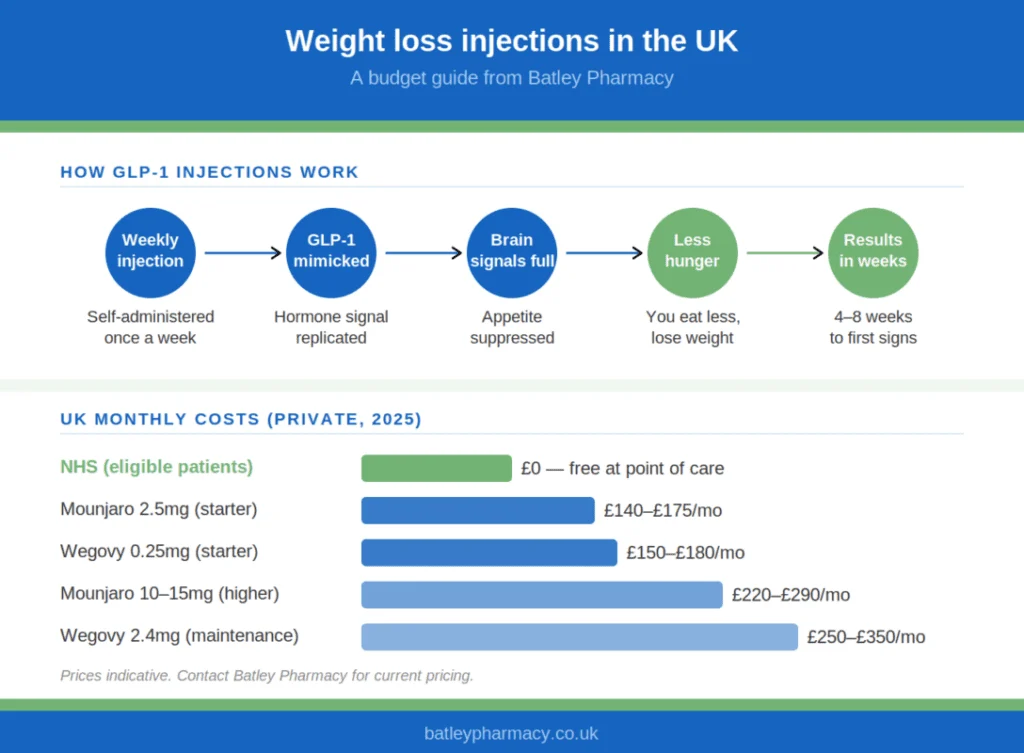
Weight loss injections — often called GLP-1 medications — work by mimicking a hormone your body naturally produces after eating. This hormone (GLP-1, or glucagon-like peptide-1) tells your brain that you’re full, slows down how quickly your stomach empties, and helps regulate blood sugar levels.

The result? You feel less hungry, eat less, and over time, lose weight.

These are not ‘quick fixes’ or fad products. They are clinically tested, prescription-only medicines approved by the MHRA (the UK’s medicines regulator) for weight management in eligible adults.

The most well-known options currently available in the UK include:

  • Wegovy (semaglutide 2.4mg) — specifically licensed for weight loss
  • Ozempic (semaglutide 0.5mg–2mg) — licensed for type 2 diabetes but widely used off-label for weight loss
  • Mounjaro (tirzepatide) — the newest option, now licensed in the UK for weight management

All require a prescription. All require proper assessment before use. And all can cause side effects, which is exactly why speaking to a qualified pharmacist or prescriber matters before you begin.

Our pharmacists at Batley Pharmacy are here to help you make the right decision for your health and your budget.

Book a weight loss consultation today.

GLP-1, Semaglutide, Tirzepatide — What’s the Difference?

If you’ve been researching weight loss injections, you’ve probably come across several names and felt a bit lost. Here’s a plain-English breakdown:

Semaglutide is the active ingredient in both Wegovy and Ozempic. Wegovy is dosed higher (2.4mg weekly) and is specifically approved for weight loss. Ozempic is lower-dosed and licensed for type 2 diabetes — though it’s sometimes prescribed off-label for weight loss when Wegovy is unavailable.

Tirzepatide (Mounjaro) is a newer dual-action medicine that targets both GLP-1 and GIP receptors. Clinical trials suggest it may produce greater weight loss than semaglutide in many patients — though it also tends to cost more at higher doses.

GLP-1 is simply the name for the class of medicines these belong to. So when you see ‘GLP-1 medication’ or ‘GLP-1 injection,’ it’s referring to any of the above.

Brand NameActive IngredientLicensed for Weight Loss?Approx. Monthly Cost (UK)MHRA Approved?
WegovySemaglutideYes ✔£140–£350/moYes ✔
OzempicSemaglutideNo (off-label)£130–£250/moYes (for diabetes)
MounjaroTirzepatideYes ✔£190–£290/moYes ✔
RybelsusSemaglutide (oral)No (off-label)£120–£200/moYes (for diabetes)

Table: Semaglutide vs Tirzepatide — Key Differences (UK Private Market)

How Much Do Weight Loss Injections Cost in the UK?

Cost is one of the most searched topics when it comes to weight loss injections — and understandably so. Here’s what you can realistically expect to pay in the UK as of 2026:

MedicineDoseApprox. Monthly Cost (Private)
Wegovy0.25mg/wk (starting)£140–£180/month
Wegovy2.4mg/wk (maintenance)£250–£350/month
Mounjaro2.5mg/wk (starting)£190–£175/month
Mounjaro10–15mg/wk (higher)£350–£460/month
NHS (eligible patients)Varies£0 (free at point of care)

Prices are indicative. Please contact us for current pricing at Batley Pharmacy.

⚠️ Important: Never purchase weight loss injections without a valid prescription from a regulated UK prescriber. At Batley Pharmacy, we offer transparent pricing and won’t charge hidden consultation fees.

NHS vs Private: Which Is the Cheapest Route?

For those who qualify, the NHS is by far the most affordable route — but access is limited and waiting times can be long.

NHS access: Weight loss injections on the NHS are currently only available through specialist Tier 3 weight management services. To be referred, you typically need a BMI of 35 or above (or 30+ with a weight-related health condition).

Private access: Most people in the UK currently access weight loss injections privately. This means a quicker start, more choice over medication, and no waiting list — but you’ll pay out of pocket each month.

If you’re unsure whether you might qualify for NHS treatment, speak to your GP or pop into Batley Pharmacy for a chat — we can help you understand your options without any pressure.

What Is the Cheapest Weight Loss Injection Available in the UK?

If affordability is your top priority, here’s what the evidence and current UK market tells us:

Mounjaro (tirzepatide) at the starter dose is currently one of the most cost-competitive options in the UK, often starting from around £140–£155/month through reputable providers.

Semaglutide (Wegovy) at starting dose is similarly priced at entry level — typically £150–£180/month — and remains a well-established, trusted option.

⚠️ Safety Warning: Compounded Semaglutide You may find significantly cheaper ‘compounded’ semaglutide online (sometimes below £100/month). These are NOT MHRA-approved, are not regulated as licensed medicines, and have been flagged as a safety concern by NHS England. We strongly advise against these products.

Our honest recommendation: The cheapest safe weight loss injection in the UK right now is likely Mounjaro at the starter dose, prescribed through a regulated UK pharmacy with a sensible titration plan. See our weight loss injection service at Batley Pharmacy.

Is Cheap Always Safe? What to Watch Out For

Here’s what to watch out for when looking for affordable weight loss injections:

  • Unregulated online pharmacies: Some websites sell injectable medicines without a prescription, without consultation, and without quality assurance. These products may be counterfeit, incorrectly dosed, or contaminated.
  • Compounded semaglutide: Not MHRA-approved and not the same as licensed Wegovy or Ozempic. NHS England has issued warnings about their use.
  • ‘No consultation needed’ offers: A legitimate service always requires an assessment of your medical history, BMI, and health goals before prescribing. If a provider skips this step, that’s a serious red flag.

What safe and affordable looks like:

  • ✔ A prescription from a registered UK prescriber
  • ✔ Supply from a GPhC-registered pharmacy (verify any provider here)
  • ✔ A proper clinical consultation (in person or via a regulated telehealth platform)
  • ✔ Ongoing monitoring and support

At Batley Pharmacy, every weight loss consultation is led by our qualified pharmacist. We take the time to understand your health and ensure any treatment we support is genuinely right for you.

Affordable Weight Loss Injections: How to Access Them Responsibly

Accessing weight loss injections affordably and responsibly isn’t complicated — but it does require going through the right channels:

  1. Step 1: Have a proper assessment: A qualified pharmacist or prescriber needs to review your BMI, medical history, current medications, and weight loss goals. This isn’t box-ticking — it’s essential for your safety.
  2. Step 2: Choose the right medicine for you: Based on your health profile, your prescriber will recommend the most suitable option — whether that’s Mounjaro, Wegovy, or another approach.
  3. Step 3: Start at the lowest dose: All of these medicines use a titration schedule. Starting at the lowest dose reduces side effects and keeps your monthly costs lower.
  4. Step 4: Get ongoing support: Weight loss injections work best alongside lifestyle changes. A good pharmacy will provide support, check-ins, and advice on diet and activity.

At Batley Pharmacy, you can access weight loss injection consultations in person at our Batley branch or online. Our pharmacist will guide you through every step — with no jargon, no pressure, and no hidden costs.

GLP-1 Tips: How to Reduce the Cost of Weight Loss Injections

Starting treatment doesn’t mean you’re locked into the highest costs. Here are practical, pharmacist-approved ways to keep your outgoings manageable:

  • Start at the lowest dose and progress slowly: There’s no benefit to rushing up the dose ladder. Many people achieve good results at lower doses — and lower doses mean lower monthly costs.
  • Use manufacturer savings schemes: The companies behind Mounjaro and Wegovy have offered introductory pricing and starter packs in the UK. Ask your pharmacy or check the manufacturer’s website.
  • Compare pharmacy pricing — but don’t sacrifice safety: Prices do vary between legitimate providers. Shop around among GPhC-registered pharmacies, but always ensure a proper consultation is included.
  • Combine with lifestyle changes from day one: Patients who make dietary and activity changes alongside their injections often reach their goals faster — meaning they may need treatment for a shorter overall period.
  • Don’t pause and restart unnecessarily: Taking breaks can mean your appetite returns and weight is regained, meaning you spend longer (and more money) on treatment overall.
  • Ask about multi-month supply discounts: Some pharmacies offer a small saving when prescriptions are supplied in multi-week packs rather than weekly. Worth asking about.

Cheap Wegovy Alternatives in the UK: Are They Worth It?

Wegovy is widely considered the gold standard for injectable weight loss in the UK — but it’s not the only option, and for many people it’s not the most affordable one either.

Mounjaro (tirzepatide)

Currently the strongest competitor to Wegovy on both effectiveness and cost. At starter doses, it’s often priced similarly or below Wegovy — and clinical evidence suggests it may produce greater average weight loss. For most budget-conscious patients, this is the most compelling alternative.

Ozempic (off-label semaglutide)

Contains the same active ingredient as Wegovy at a lower dose. Availability has been patchy due to high global demand, and NHS guidance now discourages off-label prescribing for weight loss. Approach with caution and always use a registered prescriber.

Rybelsus (oral semaglutide)

An oral tablet form of semaglutide — no injection required. Effectiveness for weight loss is generally considered lower than injectable forms. May suit patients with a strong aversion to injections.

💡 Our View Mounjaro at the starter dose currently offers the best combination of clinical effectiveness, licensing, and affordability for most patients seeking a Wegovy alternative in the UK.

Low-Cost Mounjaro UK: What You Need to Know

Mounjaro (tirzepatide) has quickly become one of the most talked-about weight loss medicines in the UK. It’s newer than Wegovy, dual-acting, and clinical trials have shown average weight loss of 15–22% of body weight at higher doses.

Dose TierWeekly DoseApprox. Monthly Cost
⭐ Starter (Most affordable)2.5mg£140–£175
Mid-range5–7.5mg£170–£220
Higher dose10–15mg£220–£290

Mounjaro dose tiers and approximate monthly costs (UK, 2025 private market)

At Batley Pharmacy, we offer Mounjaro consultations and ongoing support. Whether you’re starting for the first time or looking to switch from another medicine, our pharmacist will give you honest, personalised guidance. Learn more about our Mounjaro Consultation.

How Batley Pharmacy Can Help You Start Safely and Affordably

What We Offer at Batley Pharmacy
Personalised care, transparent pricing, and a familiar face  
✔ Face-to-face consultations with our qualified pharmacist in Batley
✔ Online consultation options for busy patients
✔ Honest, personalised assessment — not one-size-fits-all
✔ Access to Mounjaro, Wegovy, and other licensed GLP-1 medicines
✔ Transparent, competitive private pricing with no hidden fees
✔ Ongoing support and check-ins throughout your treatment
✔ Same-day advice for any questions or concerns

We’re not a faceless online service. We’re your local pharmacy in Batley — and that means we’re here when you need us, with a familiar face and genuine care behind every consultation. We also offer a convenient repeat prescription service in Batley — so once your treatment is established, reordering is effortless.

Ready to find out which weight loss injection is right for you? Book a consultation today, or simply walk in and speak to us.

Conclusion

Weight loss injections are a genuinely effective tool for many people — but cost shouldn’t force you into making an unsafe choice. The cheapest legitimate option in the UK right now is likely Mounjaro at the starting dose, accessed through a regulated UK pharmacy with a proper prescription and consultation.

Avoid unregulated online products, always ensure a qualified prescriber is involved, and take the time to find a provider you trust.

At Batley Pharmacy, we believe good healthcare shouldn’t be complicated or out of reach. Whether you’re considering your first weight loss injection or looking to switch to a more affordable option, our pharmacist is here to help — with honest advice, transparent pricing, and the kind of personal care you just don’t get from a faceless website.

Frequently Asked Questions About Affordable Weight Loss Injections in the UK

What is the cheapest weight loss injection available in the UK?
As of 2026, Mounjaro (tirzepatide) at its starter dose (2.5mg/week) is among the most competitively priced MHRA-approved weight loss injections in the UK, typically starting from around £140–£155/month through legitimate providers. Always ensure you’re purchasing through a GPhC-registered pharmacy with a valid prescription.

Can I get weight loss injections on the NHS for free?
Potentially, but access is limited. NHS weight loss injections are currently available only through Tier 3 weight management services, which require a GP referral and meeting specific eligibility criteria (typically BMI 35+ with a weight-related condition). Waiting times can be significant.

Is it safe to buy cheap semaglutide online?
No, not if it’s from an unregulated source. Unregulated semaglutide products sold online without a prescription are not MHRA-approved and may be counterfeit, mislabelled, or unsafe. Always use a GPhC-registered UK pharmacy.

Do I need a prescription for weight loss injections in the UK?
Yes. All licensed weight loss injections (Wegovy, Mounjaro, Ozempic) are prescription-only medicines in the UK. Any service offering them without a prescription from a registered prescriber is operating outside the law.

How quickly do weight loss injections work?
Most people begin to see results within 4–8 weeks, with more significant weight loss over 3–6 months. Results vary depending on the medicine, dose, adherence, and lifestyle factors.

Can Batley Pharmacy prescribe weight loss injections?
Yes. Our qualified pharmacist can conduct a consultation and support access to licensed weight loss injection medicines for eligible patients. Contact us or book online to get started.

Still Got Questions?

We're here to help you find the answers you need!

Contact Us

Weight Loss Injections UK 2026: Complete Guide to Mounjaro, Wegovy and Ozempic for Beginners

TL;DRIf you have heard words like Mounjaro, Wegovy, or Ozempic being mentioned on the news or by friends and are wondering what they actually are, you are in the right place. Weight loss injections have transformed the way doctors and pharmacists approach obesity treatment in the UK, and in 2026 they are more accessible than ever. 

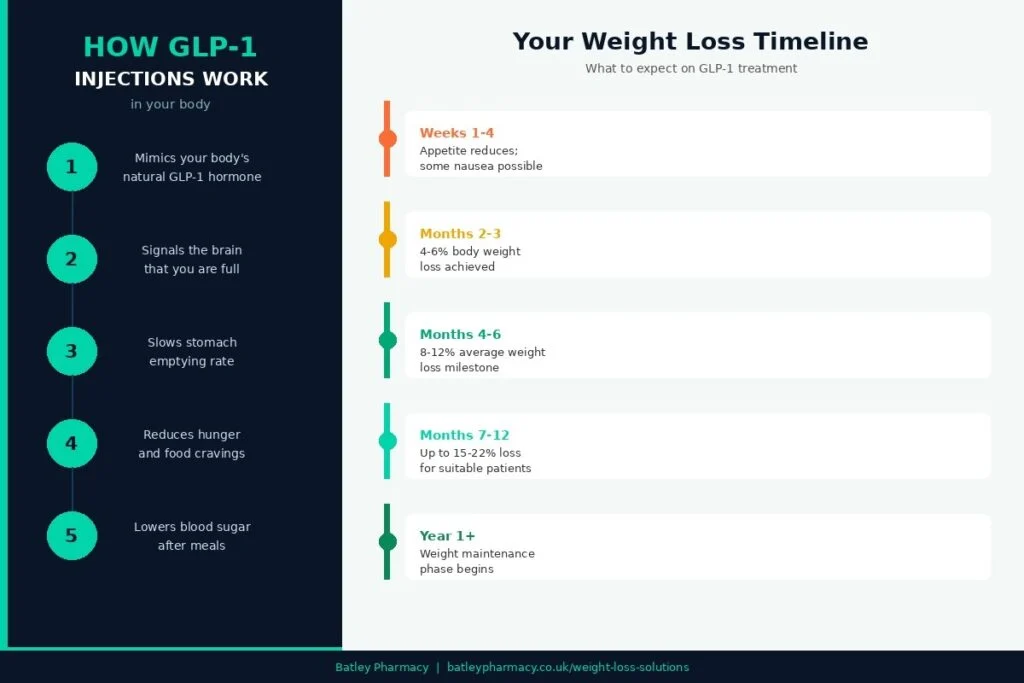
Weight loss injections are prescription medications that belong to a class of drugs called GLP-1 receptor agonists (glucagon-like peptide-1). They work by mimicking a hormone that your body naturally produces after eating. This hormone signals to your brain that you are full, slows the rate at which your stomach empties, and reduces the urge to eat between meals.

The result for many people is a significantly reduced appetite, fewer food cravings, and gradual but consistent weight loss over weeks and months. These are not quick fixes or crash diets. They are clinically trialled, medically supervised treatments for people living with obesity or weight-related health conditions.

Book Your Weight Loss Consultation

The Three Main Options: Mounjaro, Wegovy and Ozempic

There are three names you will hear most frequently in the UK right now.

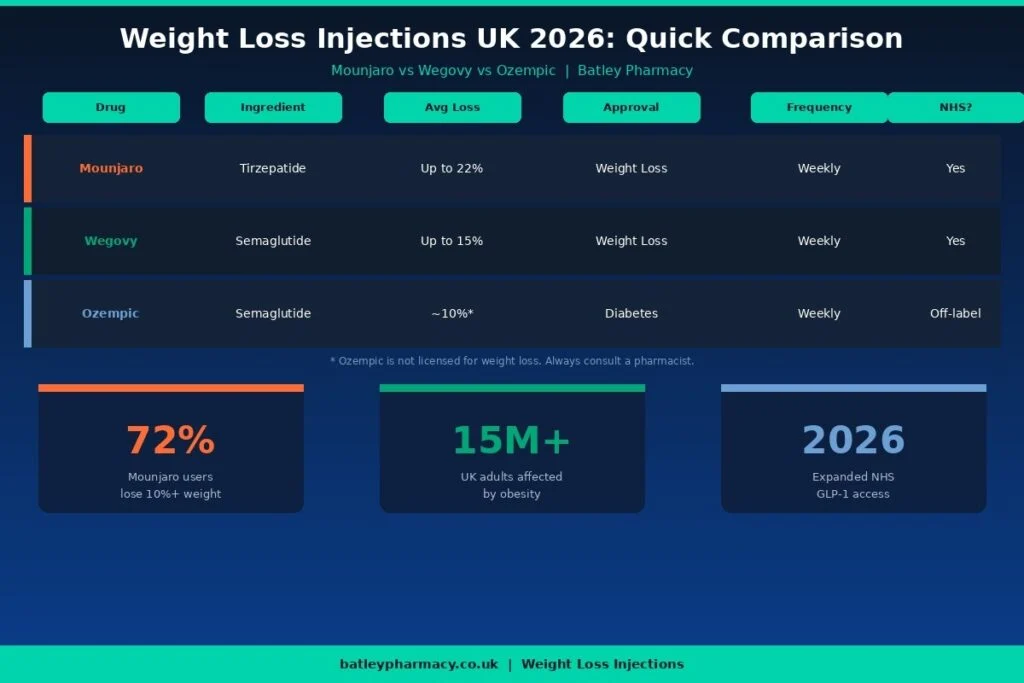
Mounjaro (tirzepatide) is currently considered the most effective of the three. It works on two receptors simultaneously, GLP-1 and GIP (glucose-dependent insulinotropic polypeptide), which gives it a dual-action effect. Clinical trials showed average weight loss of up to 22% of body weight over 72 weeks. It is administered once a week via a pre-filled pen injector and is licensed for weight management in the UK.

Wegovy (semaglutide) was one of the first GLP-1 medications to receive a UK licence specifically for weight loss. Clinical trials showed average weight loss of around 15% of body weight. Like Mounjaro, it is injected once weekly and is available via NHS prescription for those who meet the criteria, or through private providers such as Batley Pharmacy.

Ozempic (semaglutide) uses the same active ingredient as Wegovy but at a slightly different dose. It is licensed in the UK for the management of type 2 diabetes, not for weight loss directly. However, weight loss is a documented side effect, and it is sometimes prescribed off-label for this purpose. If your goal is weight management rather than diabetes treatment, Wegovy or Mounjaro are the appropriate routes to explore.

Who Qualifies for Weight Loss Injections in the UK?

NHS access to GLP-1 medications is currently managed through specialist weight management services and is based on clinical criteria. Generally, you may be considered eligible if:

  • Your Body Mass Index (BMI) is 35 or above
  • You have a weight-related health condition such as type 2 diabetes, hypertension or sleep apnoea
  • You have attempted lifestyle interventions without sustainable results

Private access through a licensed pharmacy is more flexible. At Batley Pharmacy, our clinical team assesses your suitability individually. Many patients who do not meet the NHS threshold still qualify for private treatment through a straightforward online consultation.

How Do You Use the Injections?

All three of these medications are self-administered using a small pre-filled pen that comes in your prescription package. The needle is very short and most patients describe the injection as nearly painless. You inject once a week, usually into the abdomen, thigh, or upper arm.

Your dose starts low and increases gradually over several weeks. This step-up approach is deliberate as it helps your body adjust and minimises side effects such as nausea, which is the most commonly reported issue, particularly in the early weeks.

What Results Can You Realistically Expect?

Results vary from person to person depending on starting weight, lifestyle, and which medication you are taking. That said, clinical data gives us a good picture of what is achievable.

  • Mounjaro patients in trials lost an average of 15-22% of body weight over 72 weeks
  • Wegovy patients lost an average of 12-15% over 68 weeks
  • Most patients notice a reduction in appetite within the first two to four weeks

Weight loss is generally gradual and steady. It is not uncommon to lose two to three pounds per week in the early months, with the rate slowing as you approach your body’s natural settling point.

Are There Side Effects?

The most common side effects include nausea, vomiting, constipation, and diarrhoea. These are most likely to occur in the early weeks and typically improve as your body adjusts. Eating smaller meals, avoiding fatty foods, and staying hydrated can all help manage these effects.

Serious side effects are rare but possible. These include pancreatitis and gallbladder problems. This is why GLP-1 treatments must always be prescribed and monitored by a healthcare professional. Self-prescribing or purchasing these medications from unverified online sources is not safe and is not something we would ever recommend.

Can You Get These at Batley Pharmacy?

Yes. Batley Pharmacy offers a confidential, clinically supervised weight loss service. Our team can assess your suitability, provide prescriptions where appropriate, and support you throughout your treatment journey.

We offer both in-person and online consultations, and we stock Mounjaro and Wegovy on a regular basis. Our pharmacists are trained in obesity medicine and will guide you through every step, from your first injection to ongoing monitoring.

Start Your Weight Loss Consultation at Batley Pharmacy

FAQs

Can I get weight loss injections on the NHS?

Yes, but access is currently limited and subject to strict criteria. Most patients access treatment privately through a pharmacy or weight management clinic.

How long do I need to stay on the medication? 

Most clinical guidance suggests ongoing use for sustainable results. Stopping treatment often leads to weight regain unless lifestyle changes have been embedded during the treatment period.

Are weight loss injections a replacement for diet and exercise? 

No. They work best as part of a broader programme that includes improved nutrition and regular movement. Think of them as a tool that makes those lifestyle changes far more achievable by reducing hunger.

Is it safe to buy these medications online? 

Only if purchased through a regulated UK pharmacy with a valid prescription. Buying from unregulated sources puts your health at serious risk.

Still Got Questions?

We're here to help you find the answers you need!

Contact Us

Wegovy vs Mounjaro 2026: UK Guide | Batley Pharmacy

Wegovy vs Mounjaro 2026: UK Guide
TL;DR

Wegovy (semaglutide) and Mounjaro (tirzepatide) are the two leading prescription weight loss injections in the UK in 2026. Mounjaro acts on two hormonal pathways (GLP-1 and GIP) and has produced greater average weight loss (around 20%) in clinical trials. Wegovy acts on GLP-1 alone and now achieves comparable results at the new 7.2mg dose approved in January 2026. Following Eli Lilly’s September 2025 price increase, Wegovy is now generally the more affordable option across most dose levels.

The UK weight loss landscape has changed rapidly, with injectable treatments like Wegovy and Mounjaro now at the centre of clinical and patient conversations. As demand rises, so does the key question: which treatment is actually right for you?

This guide breaks down Wegovy vs Mounjaro UK in 2026, looking at how each medication works, how much they cost, and who they are best suited for. Instead of oversimplifying the decision, it gives you a practical understanding so you can choose the most appropriate treatment with professional guidance.

What Are Wegovy and Mounjaro?

Both Wegovy and Mounjaro are once-weekly injectable medications administered via a pre-filled injector pen. Both are licensed in the UK for weight management in adults with a BMI of 30 or above, or 27 or above with at least one weight-related health condition. 

Wegovy contains semaglutide, a GLP-1 receptor agonist manufactured by Novo Nordisk. It was approved by the MHRA in the UK for weight management in 2023 and received NICE approval for use in specialist NHS services in the same year. The standard maintenance dose is 2.4mg weekly, and a higher dose of 7.2mg was approved by the MHRA in January 2026.

Mounjaro contains tirzepatide, a dual GIP and GLP-1 receptor agonist manufactured by Eli Lilly. It was approved by the MHRA in 2023. It offers six dose levels (2.5mg, 5mg, 7.5mg, 10mg, 12.5mg, and 15mg), with the maximum maintenance dose being 15mg weekly. NICE approved Mounjaro for NHS use in weight management in 2024.

Wegovy vs Mounjaro 2026: How They Work Differently

Understanding the mechanism of action is important because it explains why these two medications produce different outcomes in different individuals.

Wegovy (semaglutide): GLP-1 receptor agonist

GLP-1 (glucagon-like peptide-1) is a hormone produced in the gut after eating. Semaglutide mimics this hormone, producing the following effects:

  • Stimulates insulin release 
  • Suppresses glucagon
  • Slows gastric emptying
  • Reduces appetite
  • Increases feelings of fullness

It is a weekly injection with a new 7.2mg dose approved in 2026.

Mounjaro (tirzepatide): Dual GIP and GLP-1 receptor agonist

By acting on both GLP-1 and GIP pathways simultaneously, tirzepatide creates a broader metabolic signal that appears to produce stronger appetite suppression and greater weight loss in most patients. 

  • Dual GLP-1 + GIP agonist
  • Stronger metabolic effect
  • Weekly injection
  • More dose flexibility

Mounjaro vs Wegovy Results: What the Clinical Trials Show

STEP 1 Trial (Wegovy 2.4mg)

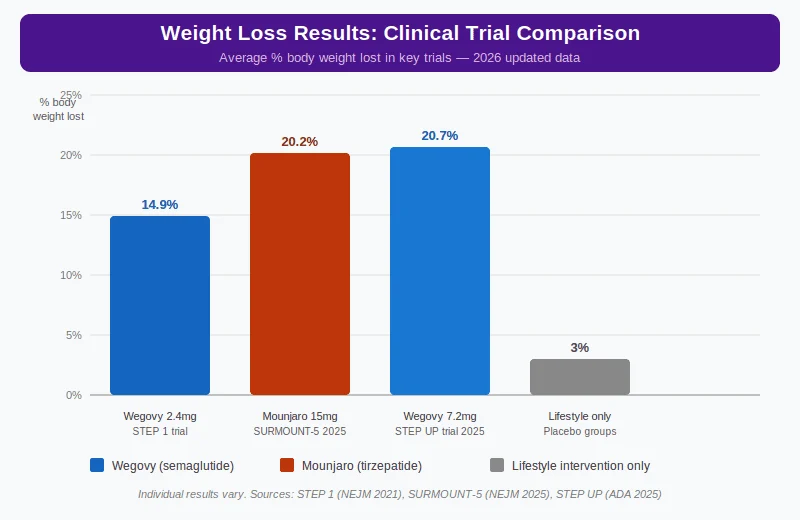
The STEP 1 trial participants on semaglutide 2.4mg lost an average of 14.9% of their body weight over 68 weeks, compared to 2.4% with placebo. Around 69% of participants achieved at least 10% weight loss.

SURMOUNT-1 Trial (Mounjaro)

The SURMOUNT-1 trial demonstrated that tirzepatide at doses of 5mg, 10mg, and 15mg produced average weight loss of 15%, 19.5%, and 20.9%, respectively, over 72 weeks, compared to 3.1% with placebo. These results were substantially larger than those seen with Wegovy in the STEP trials at comparable timepoints.

SURMOUNT-5 Trial: The First Direct Head-to-Head

The most clinically significant development in the Wegovy vs Mounjaro 2026 comparison is the SURMOUNT -5 trial, published in the New England Journal of Medicine in 2025. This was the first direct head-to-head randomised controlled trial comparing tirzepatide with semaglutide for weight loss.

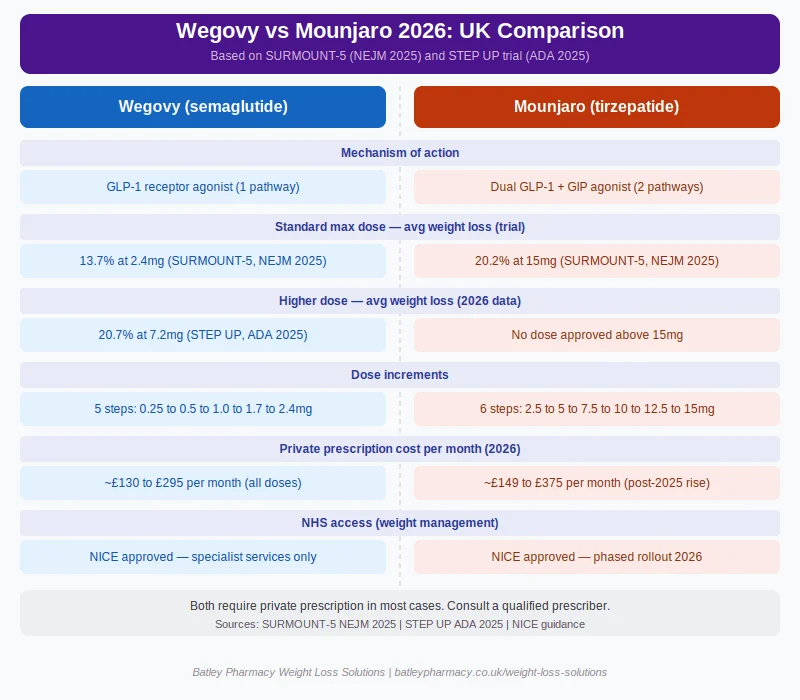
The results clearly favoured tirzepatide at the then-standard maximum doses: participants on Mounjaro 15mg lost an average of 20.2% of their body weight, compared to 13.7% for those on Wegovy 2.4mg. Approximately 45% of Mounjaro participants achieved at least 25% weight loss, compared to 19% of Wegovy participants.

STEP UP Trial: The New Wegovy 7.2mg Dose

In January 2026, the MHRA approved a higher dose of Wegovy, 7.2mg weekly, based on data from the STEP UP trial. This investigational dose produced an average weight loss of 20.7% over 72 weeks, bringing Wegovy’s top-end efficacy essentially in line with Mounjaro’s 15mg dose. The gap between the two medications at their respective maximum doses has now largely 

Wegovy vs Mounjaro Side Effects

Both medications share similar side effects due to GLP-1 action:

Common side effects:

  • Nausea
  • Vomiting
  • Diarrhoea
  • Constipation
  • Reduced appetite

Key Difference

  • Mounjaro may affect absorption of oral medications (e.g. contraceptive pill)
  • Slightly lower discontinuation rate in trials

Both medications can be associated with more serious risks. These include pancreatitis (severe abdominal pain), gallbladder disease, kidney problems linked to dehydration, and severe allergic reactions. There is also a precautionary risk of thyroid tumours, meaning these treatments are not suitable for individuals with a history of medullary thyroid cancer or MEN2 syndrome.

Mounjaro vs Wegovy Dosage Comparison

FeatureWegovy (Semaglutide)Mounjaro (Tirzepatide)
MechanismGLP-1 receptor agonistDual GLP-1 and GIP agonist
Dose increments5 (0.25, 0.5, 1.0, 1.7, 2.4mg)6 (2.5, 5, 7.5, 10, 12.5, 15mg)
Maximum licensed dose7.2mg (MHRA Jan 2026)15mg
Time to full doseApproximately 17 weeksApproximately 20-24 weeks
Injection frequencyOnce weeklyOnce weekly
NICE approved for NHSYes (specialist services only)Yes (limited rollout)

Are Wegovy and Mounjaro Available in the UK?

Both medications are available in the UK, primarily via private prescription. NHS access exists for both, but is limited.

NHS access to Wegovy: NICE approved Wegovy for use within specialist NHS weight management services in 2023, for patients with a BMI of 35 or above (or 30 or above with comorbidities). Access is limited by available service capacity, and waiting times are extended in many areas.

NHS access to Mounjaro: NICE approved Mounjaro for NHS weight management in 2024. NHS rollout is being phased, with broader commissioning expected from around mid-2026. Currently, most patients accessing Mounjaro for weight management do so privately.

Private access to both: Both medications are available immediately via private prescription from GPhC-registered UK pharmacies and online prescribing services, subject to a clinical assessment confirming eligibility.

Which is Better: Wegovy or Mounjaro?

Choose Mounjaro if:

  • You want maximum weight loss at standard doses
  • You did not respond well to semaglutide
  • You prefer more dosing flexibility

Choose Wegovy if:

  • Cost is important
  • You want proven cardiovascular benefits
  • You prefer a well-established GLP-1 treatment
  • You may benefit from the 7.2mg dose

Conclusion

In 2026, the choice between Wegovy and Mounjaro is not about one being clearly better than the other. Mounjaro may lead to slightly more weight loss at standard doses, but Wegovy now offers similar results at higher doses and is usually more affordable. This makes both options strong and effective, depending on what suits you best.

Speaking directly with a pharmacist at Batley Pharmacy allows you to make an informed, confident decision rather than guessing. With expert advice, ongoing monitoring, and easy access to care,

FAQs

Which is more effective between Wegovy and Mounjaro?

Clinical trial data shows Mounjaro produces greater average weight loss at standard doses (20.2% vs 13.7% in SURMOUNT-5). However, the new Wegovy 7.2mg dose achieves approximately 20.7% weight loss, largely closing the gap. Individual responses vary considerably.

Is Wegovy cheaper in 2026?

Yes. Following Eli Lilly’s September 2025 price increase for Mounjaro, Wegovy is now generally the more affordable option across most dose levels for private patients in the UK. The difference is approximately £600 to £1,100 over a full year at maintenance doses.

Is Wegovy worth it in the UK?

Yes, for eligible patients. The STEP 1 trial showed average 14.9% weight loss over 68 weeks, and the SELECT trial demonstrated a 20% reduction in major cardiovascular events. Wegovy is NICE-approved and clinically proven. Whether it is cost-effective depends on individual health goals and financial circumstances.

Why are people using Ozempic instead of Wegovy?

Ozempic (semaglutide 0.5mg-2mg) is licensed for type 2 diabetes management. Some prescribers have used it off-label for weight loss when Wegovy has been unavailable due to supply constraints, or because the patient already uses it for diabetes. Wegovy at 2.4mg is the dose approved specifically for weight management and produces greater weight loss than Ozempic doses.

Still Got Questions?

We're here to help you find the answers you need!

Contact Us

What Happens After You Stop Taking Mounjaro? A Complete Guide

What Happens After You Stop Taking Mounjaro? A Complete Guide

Mounjaro has become one of the most talked-about injectable medications for weight loss. Many people find it effective in reducing appetite, aiding in portion control, and supporting significant weight loss. However, understanding the physical, metabolic, and emotional effects that can occur after stopping Mounjaro is essential for anyone considering or currently using this treatment.

This guide explains what to expect when you stop taking Mounjaro, including appetite changes, weight regain risks, side effects after stopping Mounjaro, and strategies to maintain weight loss while supporting long-term health. 

How Does Mounjaro Work?

Mounjaro contains tirzepatide, a dual-acting medication that stimulates both the GLP-1 (glucagon-like peptide-1) and GIP (glucose-dependent insulinotropic polypeptide) receptors. These hormones help regulate appetite, slow stomach emptying, increase feelings of fullness, and improve insulin sensitivity. While taking Mounjaro, many people experience a sharp reduction in hunger and cravings as well as steady weight loss.

However, the medication does not permanently change your body’s biology. When you stop the weekly injections, the hormonal effects that helped suppress appetite diminish over time as the drug leaves your system.

What to Expect After Stopping Mounjaro

1. Appetite After Stopping Mounjaro

Once you stop Mounjaro, your appetite slowly returns to pre-treatment levels as the medication’s influence fades. This usually begins within a week to two weeks after your last dose and continues over the following weeks as the drug is cleared from your system.

Many people describe a return of what is sometimes called food noise. This means persistent thoughts about food, even when you are not physically hungry, and stronger cravings. Appetite regulation is one of the primary ways Mounjaro supports weight loss, so this return can feel quite noticeable. 

2. Weight Regain and Metabolic Changes

A significant concern is weight regain after stopping Mounjaro. Clinical evidence suggests that when treatment stops, many people regain a portion of the weight they lost within months to a year if lifestyle changes aren’t firmly established. 

This weight regain is related to a number of biological and behavioural factors:

  • Return of hunger signals making it easier to eat larger portions
  • Changes in metabolic rate as your body adjusts to a lower weight
  • Lessening of satiety cues originally strengthened by the medication
  • Psychological responses such as increased food preoccupation 

A review of weight-loss medication studies found that most individuals regained their lost weight within about 18 months of stopping GLP-1 and similar medications, including tirzepatide. 

3. Side Effects After Stopping Mounjaro

Stopping Mounjaro does not usually cause severe withdrawal symptoms, but some people report physical and emotional changes. These can include: 

  • Mild gastrointestinal changes such as nausea, bloating or constipation
  • Increased hunger and cravings
  • Mood shifts such as irritability or low motivation
  • Energy fluctuations
  • Temporary changes to insulin and blood sugar response 

These symptoms are part of the body re-establishing its baseline energy balance and appetite regulation without the medication.

4. Weight Loss Maintenance After Stopping Mounjaro

Mounjaro weight loss maintenance depends on the habits you build during treatment. Those who develop structured and sustainable dietary habits, regular physical activity, and psychological support for behaviour change are more likely to maintain a healthier weight long-term. 

Some people use a tapering approach rather than an abrupt stop under medical supervision. This can help your body adapt slowly while continuing nutritional and behavioural support. Discuss this option with your healthcare provider. 

Strategies to Support Your Weight After Stopping Mounjaro

Follow a Structured Meal Plan

A structured meal plan helps you make consistent, balanced choices without guessing what to eat. Nutrient-dense foods are high in vitamins, minerals, and protein but lower in empty calories, such as vegetables, lean meats, whole grains, and healthy fats. Portion control ensures you get enough energy without overeating, supporting steady weight loss.

Increase Physical Activity

Regular exercise boosts metabolism, strengthens muscles, and supports heart health. Cardiovascular exercises like walking, cycling, or swimming improve endurance and burn calories, while strength training exercises like bodyweight movements or weightlifting help build lean muscle, which increases resting metabolism and supports long-term weight management.

Track Your Eating Patterns 

Keeping a food diary or using a tracking app helps you notice when, why, and what you eat. This awareness makes it easier to recognise true hunger versus emotional or habitual eating. Mindful eating can reduce overeating, improve digestion, and help you develop a healthier relationship with food.

Consider Maintenance Programs

After reaching your weight goals, structured maintenance programs help you maintain results while avoiding weight regain. In some cases, clinicians may suggest alternative medications to support metabolism or appetite control. These should always be used under professional supervision and combined with healthy lifestyle habits for the best long-term outcomes.

Take Control of Your Weight Journey

Stopping Mounjaro can feel challenging, but it also marks a transition to independence in managing your weight. With the right support and lifestyle strategies, you can build habits that promote long-term health and weight stability. For tailored support, speak to our team at Batley Pharmacy about ongoing weight management strategies. Visit our weight loss support page to book an in-person consultation.

FAQs

Will weight come back after Mounjaro?

Many people experience some degree of weight regain after stopping Mounjaro unless lifestyle changes are sustained. Regular diet and exercise habits play a major role in long-term success. 

What to expect after stopping Mounjaro?

Expect a gradual return of appetite, possible weight increase without careful management, and shifts in energy levels as your body adjusts to its pre-medication state. 

What are the side effects of coming off of Mounjaro?

After stopping Mounjaro, some people experience increased appetite, cravings, mild digestive changes and mood shifts due to the return of normal hunger signalling. 

How to come off Mounjaro without gaining weight?

To reduce weight regain, focus on structured diet changes, regular physical activity, behaviour support, and talk to a clinician about tapering. 

Do you have to stay on Mounjaro forever?

Not necessarily, but many people with metabolic conditions find long-term treatment more supportive, similar to therapies for chronic conditions like hypertension.

Can you take a break from Mounjaro?

Some clinicians may recommend short breaks under supervision with adjustments when restarting to prevent side effects. 

What are four of the withdrawal symptoms?

Common effects after stopping include increased appetite, food cravings, mood changes and mild digestive discomfort.

Still Got Questions?

We're here to help you find the answers you need!

Contact Us

Mounjaro Weight Loss Timeline: Week by Week Guide 

Mounjaro Weight Loss Timeline

Mounjaro is a prescription weight loss injection prescribed in the UK as part of medically supervised weight management programme, particularly for patients who have struggled to achieve sustained weight loss through lifestyle measures.

This guide explains what patients can expect from Mounjaro on a week by week basis, outlining how treatment typically progresses, when key changes tend to occur, and how long it is usually continued in clinical practice.

What Is Mounjaro and Why Is It Effective for Weight Loss?

Mounjaro, known clinically as tirzepatide, is a once-weekly injectable medication that mimics two natural gut hormones involved in appetite and metabolism. It activates both GLP-1 and GIP receptors, making it more effective than earlier single hormone injections.

The medication was developed by Eli Lilly and studied extensively in people with obesity, both with and without diabetes. By reducing hunger, increasing fullness, and improving insulin sensitivity, Mounjaro supports sustained calorie reduction and fat loss when combined with lifestyle changes.

Mounjaro Treatment Duration: How Long Do Patients Stay on It?

Before exploring the week by week timeline, it is important to understand Mounjaro treatment duration. Most patients use Mounjaro for 6 to 18 months, depending on their weight loss goals, response, and ability to tolerate the medication.

Clinical research shows obesity behaves as a chronic condition. Stopping treatment early often leads to weight regain, which is why many patients remain on Mounjaro until weight stabilisation and long term habits are established.

Mounjaro Weight Loss Timeline: A Week by Week Guide

Below is a medically accurate Mounjaro weight loss timeline, based on clinical trials and how long it takes for Mounjaro to work:

Week 1: Starting Mounjaro

Treatment begins with the lowest dose, designed to help your body adjust rather than produce immediate weight loss.

What most patients notice:

  • Mild appetite reduction
  • Feeling fuller sooner
  • Minimal or no weight change

Some patients experience mild nausea or bloating. These effects are usually temporary and improve as the body adapts.

Week 2: Appetite Signals Begin to Change

By the second week, hunger signals start to reduce more consistently.

Common experiences include:

  • Reduced snacking
  • Less interest in large portions
  • Early satiety during meals

Weight loss may still be minimal at this stage, which is expected and normal.

Week 3: Metabolic Adaptation Phase

The body continues adjusting to hormonal changes. Calorie intake naturally decreases without conscious restriction.

You may notice:

  • More control over food choices
  • Fewer cravings
  • Improved blood sugar stability

Weight loss remains gradual, usually under 1 kg.

Week 4: Preparing for Dose Increase

By week four, many patients feel comfortable on treatment. This is often when prescribers prepare to increase the dose if tolerated.

What changes:

  • Appetite suppression becomes more predictable
  • Portion sizes reduce naturally
  • Early signs of weight reduction may appear

Week 5: Dose Escalation and Visible Progress

After the first dose increase, weight loss typically becomes noticeable.

Patients often report:

  • Clear appetite suppression
  • Reduced emotional eating
  • Initial drop of 2 to 4 percent of body weight

Mild gastrointestinal symptoms may reappear briefly after dose escalation.

Week 6: Consistency Builds

Hunger regulation becomes more stable. Eating patterns start to normalise around smaller, balanced meals.

At this stage:

  • Weekly weight loss becomes measurable
  • Energy levels may improve
  • Cravings continue to decline

Week 7: Fat Loss Phase Begins

By week seven, many patients are in active fat loss.

Typical outcomes include:

  • 4 to 6 percent total weight loss
  • Improved waist circumference
  • Better control around food triggers

Lifestyle changes become easier to maintain due to reduced hunger.

Week 8: Appetite Suppression Stabilises

This is often a turning point where patients feel fully adapted to treatment.

Key changes:

  • Stable appetite control
  • Predictable weekly weight loss
  • Reduced desire for high calorie foods

Weeks 9 to 12: Accelerated Weight Loss

This phase represents one of the most effective periods of treatment.

Clinical observations show:

  • 7 to 10 percent total weight loss
  • Improved insulin sensitivity
  • Reduced blood pressure in some patients

Dose increases may continue depending on tolerance and response.

Months 4 to 6: Peak Effectiveness

During this phase, Mounjaro reaches its strongest clinical effect.

Patients often experience:

  • 12 to 18 percent weight loss
  • Stable eating patterns
  • Improved metabolic health markers

This period aligns with findings from large scale clinical trials.

Beyond 6 Months: Maintenance and Long Term Use

Weight loss slows naturally as the body reaches a new equilibrium.

The focus shifts to:

  • Preventing weight regain
  • Maintaining appetite control
  • Reinforcing long term habits

Some patients remain on the same dose, while others reduce to a maintenance dose.

How Long Should You Stay on Mounjaro?

A key question is how long should you stay on Mounjaro to avoid regaining weight.

Evidence suggests:

  • Stopping before 6 months increases relapse risk
  • Continued use supports weight maintenance
  • Long term treatment is appropriate for many patients

Healthcare providers reassess regularly to ensure ongoing benefit and safety.

Mounjaro Long Term Use: What the Research Shows

Long term safety and effectiveness were demonstrated in the SURMOUNT 1 clinical trial, which followed patients for 72 weeks.

Key outcomes included:

  • Average weight loss of up to 22.5 percent
  • Sustained appetite suppression
  • Significant improvements in cardiometabolic risk factors

Participants who stopped treatment regained a substantial portion of lost weight, reinforcing the chronic nature of obesity management.

What Happens When You Stop Mounjaro?

When Mounjaro is discontinued:

  • Appetite hormones gradually return to baseline
  • Hunger increases over weeks to months
  • Weight regain may occur without support

Prescribers often recommend gradual dose reduction and continued lifestyle intervention to minimise rebound weight gain.

Mounjaro Through Batley Pharmacy

Batley Pharmacy provides an in-person consultation to make sure weight loss injections are suitable for you, this structured pathway includes:

  • Clinical suitability assessment
  • Safe dose escalation
  • Ongoing monitoring
  • Education on nutrition and long term weight maintenance

All treatment is supplied in line with UK prescribing and pharmacy regulations. With clinical oversight and lifestyle support, Mounjaro offers a powerful, evidence based option for sustainable weight management.

FAQs

How quickly does Mounjaro start working?

Most patients feel appetite changes within one to two weeks. Visible weight loss usually begins between weeks four and eight.

What is the average Mounjaro treatment duration?

Most patients remain on Mounjaro for 6-18 months, depending on goals and response.

Is Mounjaro safe for long term use?

Yes. Clinical trials support long term use when prescribed appropriately and monitored by a healthcare professional.

Will I regain weight if I stop Mounjaro?

Weight regain is common if treatment stops abruptly without lifestyle support. Maintenance strategies reduce this risk.

Can Mounjaro be used purely for weight loss?

Yes. In the UK, it may be prescribed off label for weight loss following a clinical assessment.

Still Got Questions?

We're here to help you find the answers you need!

Contact Us

How Long Does It Take to Lose Weight on Wegovy?

Wegovy has rapidly become one of the most talked-about treatments for weight management in the UK. Clinically proven to support significant weight loss, it works best when combined with lifestyle changes such as a balanced diet and regular exercise. 

At Batley Pharmacy, we understand that many patients considering the weekly injectable medication Wegovy want a clear understanding of how long it takes to see weight-loss results, what the timeline looks like, and what influences outcomes. Let’s explore the Wegovy weight loss timeline, what to expect week by week, and the clinical evidence behind it.

What is Wegovy and How Does It Work?

Wegovy (semaglutide) is a prescription-only weight loss injection that mimics a natural hormone in the body called GLP-1 (glucagon-like peptide-1). This hormone helps regulate appetite and food intake. By activating GLP-1 receptors in the brain, Wegovy helps you feel fuller for longer, reduces cravings, and slows digestion. As a result, you eat less and gradually lose weight.

Wegovy is typically prescribed as a once-weekly injection, approved for weight management in adults with obesity (BMI ≥ 30) or overweight (BMI ≥ 27) with at least one weight-related comorbidity and its dose is increased gradually over several weeks to minimise side effects like nausea or bloating.

At Batley Pharmacy, when offering Wegovy as part of a weight-loss injection service, we emphasise that Wegovy is not a stand-alone solution but is most effective when combined with lifestyle modifications (diet, physical activity, behaviour change).

The Wegovy Weight Loss Timeline

Weight loss on Wegovy is a gradual process that depends on factors such as dosage, metabolism, diet, exercise habits, and overall health.

Below is a general Wegovy weight loss timeline based on clinical trials:

Month 1

Early phase: Weeks 1–4

During the first few weeks, your body is adjusting to semaglutide. The dose typically starts at 0.25 mg once weekly to allow your system to adapt.

At this stage, most users may not see significant weight loss yet. Some might notice reduced appetite or smaller portion sizes, which is a good early sign that the medication is beginning to work.

Month 2

Weeks 5–8: Early Changes Begin

By week 5, the Wegovy dose usually increases to 0.5 mg per week. At this point, many people begin to notice early changes such as reduced appetite and modest weight loss. On average, individuals may lose about 4% of their body weight, which is roughly 2–4 pounds, by the end of the second month.

Consistency is key here. Sticking to a healthy diet and being physically active can enhance your early results.

Month 3

Weeks 9–12: Noticeable Weight Loss

By weeks 9–12, if you’re tolerating Wegovy well, your dose is usually increased to 1 mg per week. At this point, many users have settled into their routine of healthier eating and regular activity, which helps reinforce steady progress.

As the dose increases, the body’s response to semaglutide becomes more evident. Most people begin to see more noticeable changes in their weight, appetite control, and energy levels.

Clinical data suggests that by this stage, individuals may experience an average weight loss of around 6% of their starting body weight, reflecting the combined impact of the medication and consistent lifestyle changes.

Month 4

Week 13 and Beyond

As the dose is gradually increased to 1 mg, 1.7 mg, and finally 2.4 mg weekly, the body’s response becomes more pronounced.

At this point, many users begin to notice visible results. Clothes start to fit differently, appetite is better controlled, and energy levels often improve. As the Wegovy dose increases, its effects on satiety and calorie intake become stronger, helping you stay consistent with your progress.

By this stage, users typically experience more noticeable changes in weight, body composition, and energy levels. Clinical studies suggest an average weight loss of 5–10% of body weight by month 3 or 4.

Wegovy Weight Loss Results: What to Expect

Individual Wegovy weight loss results vary, but clinical data provide a helpful reference:


Duration

Average weight loss 

STEP 1 Trial Notes 

1 month (4 weeks)

2–4 lbs (1–2 kg)

Early weight loss is mostly water and glycogen. Results vary widely.

3 months (12–16 weeks)

10–15 lbs (5–7 kg)

Approximately 5–6% of body weight is lost on average.

6 months (28 weeks)

20–30 lbs (9–14 kg)

Around 12–14% of body weight is typically reduced.

12 months (68 weeks)

Up to 15–20% of the starting weight

68% of participants lost ≥10%, 50% lost ≥15%, and 25% lost ≥20% of body weight.

It’s important to remember that results depend on calorie intake, physical activity, and adherence to treatment. Some people lose weight faster, while others experience a slower but steady pace.

Wegovy Results: How Fast Can You Expect to See Changes?

If you’re wondering about Wegovy results and how fast they appear, most people begin noticing changes between 4–8 weeks. Appetite reduction is usually the first sign, followed by gradual weight loss.

Slow and consistent progress is more sustainable and reduces the risk of regaining weight once the treatment stops.

According to the STEP 1 study, the most significant weight changes occurred after 12 to 28 weeks, when the full maintenance dose of 2.4 mg was reached.

Wegovy Before and After Results

Many patients who struggled with weight loss for years have reported significant progress after consistent treatment.

For example, participants in the STEP 1 trial lost an average of 14.9% of their body weight over 68 weeks, which translates to roughly 35 pounds for someone weighing 230 pounds at the start. Beyond the scale, users report improved confidence, better sleep, and more energy.

How to Maximise Your Wegovy Weight Loss Results

To get the most out of your Wegovy journey:

  1. Stay consistent with your injections

Administer the dose on the same day each week.

  1. Follow a balanced diet

Focus on lean proteins, fruits, vegetables, and whole grains.

  1. Be active

Aim for at least 150 minutes of moderate exercise per week.

  1. Track your progress

Monitor your weight, meals, and activity levels.

  1. Consult your prescriber 

Stay in touch with your pharmacist or prescriber so they can adjust your plan if side effects occur or progress slows.

Future of Wegovy Treatment 2026

Recent UK developments in weight management feature evaluations for a Wegovy 7.2 mg formulation to combat weight-loss plateaus and expanded NICE guidelines recognizing cardiovascular benefits. Additionally, regulators have approved oral GLP-1 tablet alternatives, while strict new GPhC and MHRA rules require verified BMI checks and GP coordination for online prescriptions. For more details, visit the UK’s National Institute for Health and Care Excellence (NICE) or the Medicines and Healthcare products Regulatory Agency (MHRA).

Start Your Weight Loss Journey with Batley Pharmacy

At Batley Pharmacy, we offer personalised support and guidance for patients starting Wegovy weight loss injections. Our pharmacists can help you understand the treatment, monitor your progress, and ensure safe, effective use.

Take the first step towards sustainable weight management. Book your Wegovy consultation at Batley Pharmacy today.

FAQs

How long does it take to lose 20 pounds on Wegovy?

Most people can lose around 20 pounds within 3–6 months, depending on diet, activity, and adherence to treatment. Individual results vary

How to speed weight loss on Wegovy?

Combine Wegovy with a calorie-controlled diet, regular exercise, and consistent weekly dosing. Avoid skipping meals or doses to maintain steady results.

How much weight can you lose on Wegovy in 1 month?

Typically, users lose 2–4 pounds in the first month as the dose gradually increases. Significant loss occurs after 8–12 weeks.

How fast does Wegovy work for weight loss?

Wegovy begins reducing appetite within the first few weeks, with visible results appearing between 1–2 months of consistent use.

Do you regain weight after stopping Wegovy?

Some people regain weight after stopping Wegovy if lifestyle changes aren’t maintained. Continued focus on diet and exercise helps preserve long-term results.

Is Wegovy suitable for everyone?

Wegovy is approved for adults with a BMI ≥ 30, or ≥ 27 with weight-related conditions like high blood pressure or diabetes. Always consult a healthcare professional before starting treatment.

Does Wegovy stop working after a while?

No, but weight loss may slow over time as your body adapts. Adjusting diet and activity levels can help continue progress.

Still Got Questions?

We're here to help you find the answers you need!

Contact Us

How to Switch from Mounjaro to Wegovy? (UK 2025 Guide)

In the evolving landscape of weight-loss injections, many patients in the UK are considering switching from Mounjaro to Wegovy due to rising costs, limited availability, or new clinical preferences.

In this guide, we will help you compare the benefits, understand the dosing differences, and ensure a safe switch. With clear advice and ongoing support, we aim to make your journey towards sustainable weight loss as smooth as possible. 

Difference Between Mounjaro and Wegovy

Mounjaro (tirzepatide) and Wegovy (semaglutide) are both once-weekly injectable treatments classified as GLP-1 receptor agonists, helping to reduce appetite and slow gastric emptying. While they share similarities as GLP-1 receptor agonists, Mounjaro shares a distinct advantage of being a dual agonist targeting both GLP-1 and GIP receptors. 

Clinical evidence highlighting the difference: 

  • Mounjaro (tirzepatide): In the SURMOUNT-1 trial, participants without diabetes achieved an average weight loss of up to 22.5% of body weight over 72 weeks at the highest dose (15 mg).
  • Wegovy (semaglutide): In the STEP-1 trial, participants without diabetes reported an average weight loss of about 14.9% of body weight over 68 weeks when combined with lifestyle changes.

Both medications can cause gastrointestinal side effects such as nausea, constipation, or fatigue. However, because Mounjaro acts on two hormonal pathways, some patients may experience more pronounced side effects compared to Wegovy. 

Mounjaro Price Increase

As of 1 September 2025, the manufacturer Eli Lilly raised UK private prices for Mounjaro by up to 170%, moving from around £122 to £330 for the highest dose. While NHS patients remain protected under separate agreements and continue paying the previous pricing rates, private patients now face a substantial financial burden. 

This cost surge has made long-term treatment financially challenging for many patients and prompted consideration of more affordable alternatives like Wegovy. 

Mounjaro Shortage UK

Following the recent price increase, patients across the UK have also faced significant shortages of Mounjaro. Eli Lilly paused supplies, and wholesalers faced allocation limits, leading to stock outages across major chains, causing difficulty for patients to continue treatment consistently. 

The combination of higher costs and supply constraints has created uncertainty for patients relying on Mounjaro. In some cases, individuals have had to delay their treatment, while others are now considering switching to Wegovy, which remains more widely available and comparatively more affordable.

Why are Patients Switching from Mounjaro to Wegovy?

Demand for Wegovy has increased sharply as a result, with some reports noting a surge of more than 2,500% in UK orders following the announcement of Mounjaro’s price hike. For patients switching, there is a need for seeking professional guidance before making changes to their treatment plan, especially when transitioning between medications with different mechanisms and dosing schedules.

Medical Consultation

Our healthcare professional will assess your current Mounjaro dosage, tolerance, and treatment goals.

One-Week Transition Period

The commonly advised one-week gap between the last Mounjaro dose and starting Wegovy is reflected in UK clinical guidance and pharmacy advice, though it is not directly sourced from Eli Lilly publications. 

Some UK clinics note that Eli Lilly has suggested a longer 30-day gap to minimise overlapping side effects, but in practice, a 7-day interval is more widely adopted.

Starting Dose of Wegovy

Depending on your Mounjaro dose and tolerability, your Wegovy starting dose may be higher than the standard initial dose, though typically slightly lower than an equivalent strength to help ease the switch. 

Titration and Monitoring

Wegovy dosing is gradually increased, e.g., 0.25 mg to  0.5 mg to 1 mg to 1.7 mg to 2.4 mg maintenance, depending on tolerance and therapeutic response. You’ll be monitored for side effects and progress.

Support and Follow-Up

Batley Pharmacy ensures ongoing support during and after the switch, including dosage guidance, lifestyle advice, and side-effect management.

By following these standard protocols, the Switch from Mounjaro to Wegovy can be smooth and safe.

Conclusion

At Batley Pharmacy, we understand the pressures many patients face: rising costs, uncertain supply, and treatment decisions. Our aim is to support you with clear guidance on how to switch from Mounjaro to Wegovy, ensuring safety, continuity, and value through expert clinical supervision. Reach out to our prescribing pharmacy team to discuss your personalised plan and continue confidently toward your weight-loss goals.

FAQs

Which has worse side effects, Wegovy or Mounjaro?

Side-effects vary individually. Mounjaro’s dual-hormone action may lead to stronger effects, but both drugs can cause similar symptoms, like nausea, and tolerability depends on the person.

Can I start on a higher dose of Wegovy if I have already been on Mounjaro?

Yes, under clinical guidance you may begin a higher than the usual starting dose of Wegovy, based on your current Mounjaro dose and side-effect profile.

Which is better for weight loss?

Mounjaro shows slightly greater average weight-loss in trials (22%) compared to Wegovy (17–21%), but individual response and safety profile matter in clinical decisions.

Is it safe to switch between Mounjaro and Wegovy?

Yes, switching is safe when overseen by a healthcare professional, ensuring there is no overlap and side-effect risks are minimised.

Are there any foods or medications I should avoid after switching?

No specific foods or medications must be avoided. Monitor for new triggers and maintain your existing diet and exercise routine.

Why are people switching from Mounjaro to Wegovy in the UK 2025?

Main reasons include steep private price increases for Mounjaro, supply shortages, and Wegovy’s comparatively lower cost and greater availability.

Can I switch directly from Mounjaro to Wegovy?

You should not overlap treatments; a one-week interval between your last Mounjaro dose and your first Wegovy dose is recommended.

How much does Wegovy cost compared to Mounjaro in the UK 2025?

Wegovy averages between £85–239.99 per month, substantially lower than Mounjaro, which has increased to £270–£330 per month for higher doses.

Is Wegovy available on the NHS in 2025?

Access to Mounjaro via NHS began in mid-2025 but remains limited regionally. Wegovy could be available privately and may gain broader NHS access later, subject to NICE and NHS commissioning guidance; currently, access remains predominantly private.

Still Got Questions?

We're here to help you find the answers you need!

Contact Us

Mounjaro Price Hike & Shortage Report August 2025 Explained

Mounjaro-Price-Hike-&-Shortage

When Mounjaro arrived in the UK in 2024, as a weekly injection that could help with both type 2 diabetes and weight loss, it quickly became one of the most talked-about medicines of the decade. But now, just a year later, the Mounjaro price increase is set to hit, and patients paying privately will feel it the most.

From 1 September 2025, Eli Lilly will raise Mounjaro’s private prices in the UK by as much as 170%. For those on the higher doses, the monthly bill will jump from around £122 to £330. 

Mounjaro Price Hike UK 

Eli Lilly will raise private prescription prices by up to 170%. The highest monthly dose (15 mg) will rise from around £122 to £330, while lower doses will also see sharp increases: 


Mounjaro dose strengths (mg)

Current UK Private Price 

New Private Price (From Sept 1, 2025)

Percentage Increase %

2.5 mg

£92

£133

+45%

5 mg 

£92

£180

+96%

7.5 mg and 10 mg 

£107

£255

+138%

12.5 mg and 15 mg 

£122

£330

+170%

Note: These are official list prices. Private patients may face additional costs once pharmacy consultation and dispensing fees are included. 

Why Is This Happening?

  • Global price alignment

When Mounjaro entered the UK market, prices were kept low to encourage access and avoid delays in NHS approval. Lilly has now urged that UK costs must align with international markets.

  • Donald Trump’s demands on drugmakers 

The political pressure has caused to raise European prices so that Americans are not subsidising cheaper global access have played a part. This Mounjaro price hike UK is partly a response to such pressure.

  • Rising demand

The global surge in demand for Mounjaro has made it one of the fastest-selling medicines, leading to Lilly’s decision to revise pricing.

Who Will Be Affected by the Increase?

  • Private patients

Anyone paying out of pocket via online pharmacies, private providers, or other telehealth platforms will face the full rise in Mounjaro.

  • NHS patients

NHS is not affected. Those prescribed through NHS diabetes or weight management pathways will still pay only the standard prescription fee.

This divide means affordability is now a pressing issue for many private patients.

Mounjaro Stockpiling & Shortage Concerns

With the increase in prices, reports of Mounjaro stockpiling have surfaced. Individuals are trying to buy extra pens before the Mounjaro price freeze ends in September. Pharmacists warn this could cause a Mounjaro shortage UK issues during August 2025.

Stockpiling concerns include:

  • Risk of supply chain issues and delays for other patients.
  • Unsafe use if doses are stored incorrectly.
  • A potential rise in the black market weight loss drugs UK, as counterfeit suppliers take advantage of the price hike.

Eli Lilly has not confirmed formal restrictions but is working with providers to monitor supply.

Alternative Weight Loss Treatments UK

For patients struggling with affordability, there are options:

  • Wegovy vs Mounjaro UK price

Wegovy may be cheaper and more available for some, though supply shortages have also been reported.

  • Alternative weight loss treatments UK

NHS lifestyle support programmes, dietician referrals, or other medical interventions.

The future of Mounjaro supply in the UK remains uncertain, but the 2025 price rise sets a precedent: breakthrough medicines can transform lives, but global politics and corporate strategies shape their affordability.

Final Thoughts

If you use Mounjaro privately, the changes to Mounjaro pricing will affect patients trying to manage their health and well-being. With higher private costs coming into force from September 2025, it’s essential to plan your next steps carefully. Speak to your clinician about alternatives like Wegovy, check whether you may qualify for NHS treatment, and most importantly, only source your medicines from trusted, GPhC-registered UK pharmacies. 

At Batley Pharmacy, we’re here to provide clear advice with in-person consultations and safe access to regulated treatments, helping you make informed decisions during this period of change.

FAQs

How much will Mounjaro cost after September 1, 2025?

Depending on the dose, prices will rise between 45% and 170%. The highest dose (15 mg) will cost around £330 per month.

What risks are associated with stockpiling Mounjaro pens?

Stockpiling can cause supply shortages, unsafe storage, and even encourage the black market. Patients are urged to order responsibly to protect access for everyone.

How is Eli Lilly supporting pharmacies to mitigate cost increases?

Eli Lilly has introduced programmes and is working with UK providers to smooth the transition, though private patients will still face higher costs.

Will NHS prescribing be affected by the private prescription price hike?

No. NHS patients remain fully unaffected under Lilly’s fixed-price deal and will continue paying only the standard prescription charge.

Why is Eli Lilly increasing Mounjaro’s UK price by up to 170%?

Eli Lilly says the move aligns UK prices with global markets. Originally, UK pricing was kept low to accelerate NHS access.

What role did pressure from Donald Trump play in the price rise?

Trump has pushed drugmakers to raise European prices, arguing that Americans should not bear higher costs while Europe pays less. Lilly’s UK price hike reflects this political pressure.

Will the NHS still pay the old price for Mounjaro?

Yes. NHS agreements are unaffected, and the old pricing structure remains in place for public prescriptions.

Are private healthcare providers impacted differently?

Yes. Private patients will face the rise in pricing, with consultation and dispensing fees potentially raising total monthly costs even further.

Still Got Questions?

We're here to help you find the answers you need!

Contact Us