
| TL;DR Earwax is one of those things most people would rather deal with quietly and quickly at home. It makes sense. Reaching for the cotton buds or picking up an ear candle at the chemist feels like a simple solution. The problem is that many of the most popular home ear cleaning methods are either completely ineffective or genuinely dangerous. This guide explains what is safe, what is not, and when it is time to visit your pharmacy for proper earwax removal. |
Earwax is a normal and important part of ear health, but when it builds up, it can cause discomfort, muffled hearing, or a blocked feeling. It is no surprise that many people try to deal with it quickly at home using everyday solutions.
The problem is that some of the most common methods can do more harm than good. From cotton buds to ear candles, not everything is safe or effective. This guide will help you understand what you can safely do at home and when it is better to visit Batley Pharmacy for professional earwax removal.
What Is Earwax and Why Does It Build Up?
Earwax, known medically as cerumen, is a natural substance produced by glands inside the ear canal. It serves a protective function. It traps dust, debris and bacteria, and its slightly acidic composition helps prevent infections. In most people, the ear is a self-cleaning system. Old wax gradually migrates from the inner ear canal towards the outer ear, where it dries up and falls away naturally.
However, in some people wax builds up faster than it can clear. This can cause a blocked or full feeling in the ear, temporary hearing loss, tinnitus (ringing), earache, or a sensation that sounds are muffled. These are signs that the wax has impacted and needs to be addressed.
Common reasons for excessive build-up include:
- Naturally narrow or curved ear canals
- Wearing hearing aids or earbuds regularly
- Producing particularly hard or dry wax
- Using cotton buds, which push wax deeper rather than removing it
What Home Methods Are Safe?
There are a small number of home approaches that are genuinely safe and recommended by the NHS.
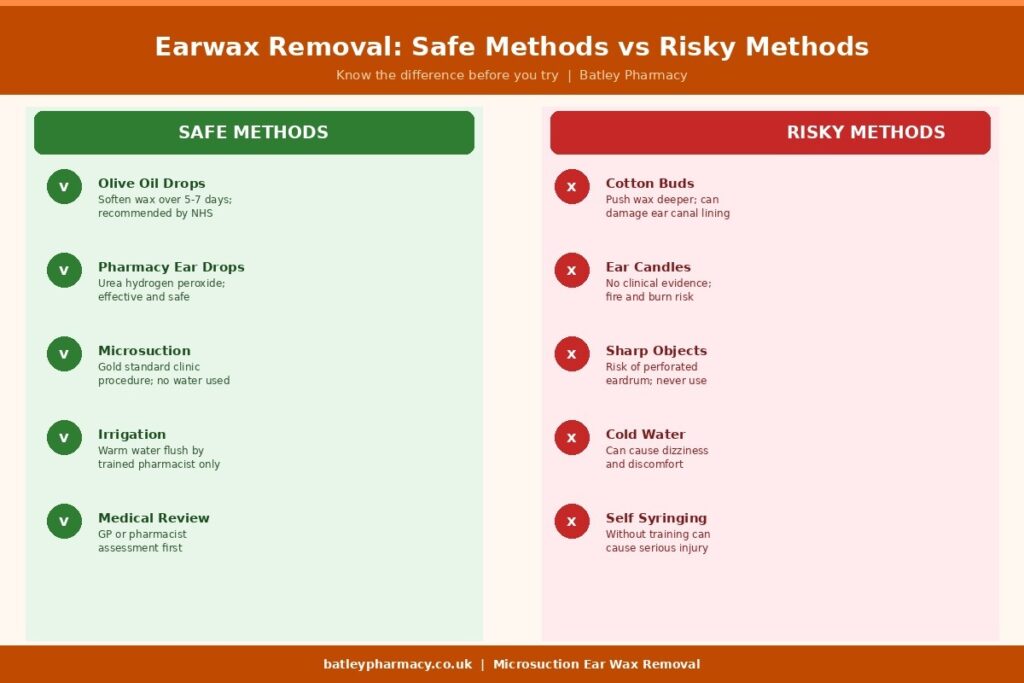
Olive oil drops are the most widely endorsed home treatment. Applying two to three drops of warmed (not hot) olive oil into the affected ear, twice a day for up to two weeks, softens wax so that it can move out naturally. This is gentle, inexpensive, and has no significant risks when used correctly. You can buy pre-made olive oil ear drops from most pharmacies.
Pharmacy earwax drops containing urea hydrogen peroxide (such as Otex) are also available over the counter. These work by releasing oxygen when they come into contact with wax, which breaks it down and helps it drain. These are effective for mild to moderate blockages but are not suitable for everyone. If you have had ear surgery, a perforated eardrum, or ear infections, speak to your pharmacist before using any drops.
Gentle warm water irrigation at home, using a purpose-made bulb syringe with body-temperature water, is sometimes recommended as a follow-up to softening drops. It should never be done with cold water, as this can cause vertigo, and should only be attempted if the eardrum is intact.
What Home Methods Are Dangerous?
Cotton buds are the most misused ear care product in the UK. The instinct to poke them into the ear canal is incredibly common, but they do not remove wax. They push it further in, compacting it against the eardrum. The NHS and all major ear health organisations explicitly advise against inserting cotton buds into the ear canal. They can also graze the delicate skin of the canal, increasing the risk of infection.
Ear candles are hollow fabric tubes dipped in wax that are placed in the ear and lit at the other end. The theory is that the heat and suction draw wax out. Multiple clinical studies have demonstrated that ear candles do not remove wax and offer no therapeutic benefit. They also carry a genuine risk of burns to the face, ear and hair, and have caused fires. They should be avoided entirely.
Sharp or pointed objects of any kind, including hair clips, pen lids, or fingernails, should never be placed in the ear canal. The risk of perforating the eardrum or causing a serious injury is significant.

When Should You Visit a Pharmacy?
If you have tried olive oil drops for a week or two and your symptoms have not improved, it is time to seek professional help. A pharmacist can assess your ears and recommend the most appropriate next step.
Microsuction is considered the gold standard treatment for earwax removal. It involves using a fine, low-pressure suction device to remove wax under a microscope or magnifying lens. It is quick, comfortable, and does not involve water, making it suitable for people who have had ear surgery or who have a history of perforated eardrums. No pre-treatment with oil drops is required, though softening the wax beforehand can make the procedure even more efficient.
Irrigation (ear syringing) by a trained professional is another clinic-based option. It uses a controlled flow of warm water to flush wax out. It is effective for most straightforward cases but is not suitable for everyone, particularly those with a history of ear problems.
At Batley Pharmacy, we offer professional microsuction earwax removal. Our appointments are quick, discreet, and available without a GP referral. Most patients notice an immediate improvement in their hearing the moment the appointment is complete.
Signs You Should Not Wait
Visit your pharmacy promptly if you experience any of the following alongside blocked ears:
- Sudden or severe hearing loss
- Pain, discharge or bleeding from the ear
- Dizziness or balance problems
- Symptoms following an injury to the head or ear
- Signs of infection such as fever or swelling behind the ear
These could indicate something more serious than a simple wax blockage and warrant prompt assessment.
FAQs
How often should I clean my ears?
In most cases, never. The ear is self-cleaning. Regular ear “cleaning” with cotton buds or other tools is unnecessary and often causes more problems than it solves.
Can earwax removal drops make things worse?
If used incorrectly or on damaged ears, yes. Always read the packaging and speak to your pharmacist if you are unsure whether drops are suitable for you.
Does microsuction hurt?
The vast majority of patients find microsuction comfortable. You may hear some noise from the suction device, but the procedure itself is not painful.
How long does a microsuction appointment take?
Typically, between 15 and 30 minutes, including the initial assessment of both ears.