
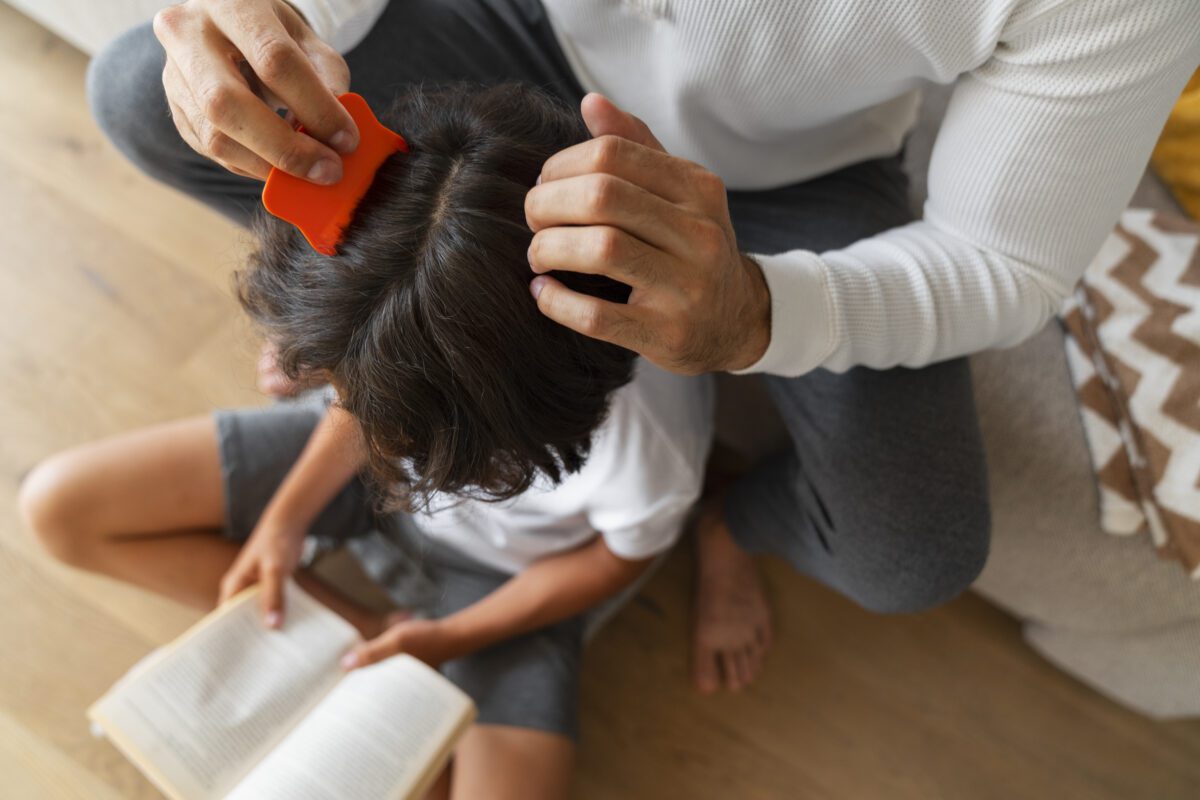
| TL;DR Head lice are very common when children return to school, but they are easy to manage with the right approach. Early detection, proper treatment, and regular checking can help stop them from spreading and prevent reinfestation. |
When the school term starts, cases of head lice tend to rise quickly as children spend more time in close contact. It is a common issue for families across the UK, and while it can feel frustrating, it is not a sign of poor hygiene. Knowing what to look for and how to act early can make all the difference.
Many parents turn to quick treatments, but not all methods are equally effective. Understanding how to spot lice, choose the right treatment, and follow through properly is key to clearing them completely. This guide covers everything you need to manage head lice with confidence and keep them from coming back.
What Are Head Lice?
Head lice (Pediculus humanus capitis) are tiny, wingless insects that live on the human scalp and feed on small amounts of blood. They are roughly the size of a sesame seed when fully grown and vary in colour from greyish-white to brown. Their eggs, commonly called nits, are even smaller, oval-shaped, and attached firmly to individual hair shafts close to the scalp.
Head lice cannot jump, fly, or swim. They spread almost exclusively through direct head-to-head contact. In a school environment where children play closely together, this makes them extremely common. Having head lice is not a sign of poor hygiene. It has absolutely nothing to do with how often a child washes their hair.
Understanding the Life Cycle
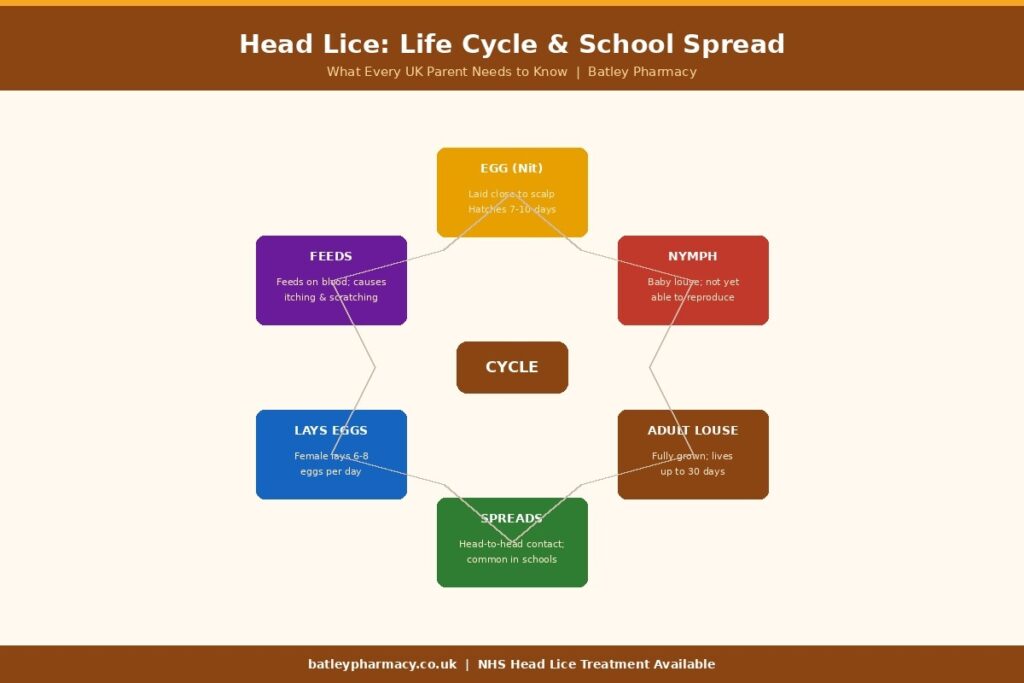
The life cycle of a head louse has three stages, and understanding this is important when it comes to treatment.
A female louse lays between six and eight eggs per day, cementing them to the hair shaft close to the warmth of the scalp. The eggs hatch after approximately seven to ten days, releasing a nymph, which is a baby louse. Over the following ten days the nymph matures into an adult louse capable of reproducing. The adult can live on the scalp for up to 30 days.
This cycle is why a single treatment is often not enough. Most treatments kill live lice but may not be fully effective against eggs. A second application is required seven days after the first to kill any lice that have hatched in the intervening period.
How to Spot Head Lice
The classic sign is itching, caused by an allergic reaction to louse saliva. However, many children, particularly those with their first infestation, do not itch at all. This means you can only reliably confirm head lice by checking with a fine-toothed detection comb on wet, conditioned hair.
Here is how to check effectively:
- Wash your child’s hair and apply plenty of conditioner. Do not rinse it out.
- Comb through the hair using a fine-toothed detection comb, section by section.
- Wipe the comb on a white tissue or paper towel after each stroke.
- Look for live lice or eggs on the tissue.
Live lice are the confirmation you need. Finding nit casings (empty, white egg shells) alone does not mean the infestation is currently active, as casings remain attached to the hair long after treatment.
Which Treatments Work for Head Lice?
There are two main types of clinically proven head lice treatment available at UK pharmacies.
Dimeticone-based treatments (such as Hedrin) work by physically coating and suffocating the lice rather than using insecticides. This is significant because it means lice cannot develop resistance to them. Hedrin Once is applied to dry hair, left for eight hours or overnight, and then washed off. It is suitable from six months of age and is the first choice for most families.
Malathion (such as Derbac-M) is an insecticide-based treatment that kills lice and some eggs on contact. It is applied to dry hair and left for 12 hours. It is effective but not suitable for children under six months, and some lice in the UK have developed partial resistance to insecticides over time, which can reduce effectiveness.
Both treatments require a repeat application seven days after the first. Wet combing alone, sometimes called the “bug busting” method, can also be effective but requires four sessions over two weeks and meticulous technique to work properly.
Treatments to avoid: Tea tree oil, mayonnaise, vinegar, and other home remedies have no reliable clinical evidence to support their use against head lice. They are not recommended.
What to Do if Your Child’s School Sends a Letter
Many schools notify parents when head lice are detected in the class, though current UK public health guidance has moved away from the old “exclusion” policy. Children with head lice do not need to stay off school. What matters is starting treatment promptly.
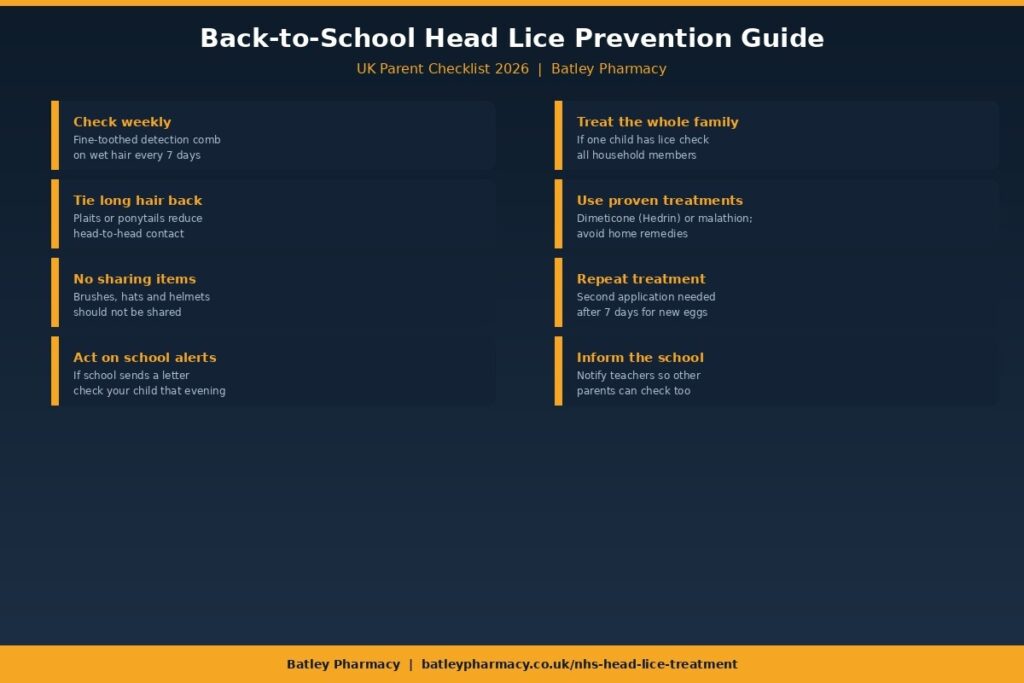
When you receive a school nit letter, check every member of your household that same evening using the wet combing method described above. If lice are found on any family member, treat everyone who is affected on the same day. Treating one child while others in the household are infected will simply result in reinfestation.
It is also courteous to let other parents in your child’s immediate friend group know discreetly, so they can check their children too.
How to Prevent Head Lice Spreading
While you cannot realistically prevent your child from ever getting head lice, you can reduce the risk significantly.
- Weekly combing checks on all school-age children in your household using a detection comb. Catching an infestation early reduces the spread considerably.
- Tie long hair back in plaits, buns or ponytails during school days. This reduces the amount of loose hair that can make contact with another child’s head.
- Do not share hairbrushes, combs, hats, helmets or headbands between children.
- React quickly to school alerts. The faster you check and treat, the less chance there is of lice spreading to siblings or friends.
Getting Treatment at Batley Pharmacy
Batley Pharmacy stocks a full range of clinically proven head lice treatments. Our pharmacists can advise you on the most suitable option based on your child’s age and any previous treatments used. We can also confirm whether what you are seeing is an active infestation or old nit casings, saving you from unnecessary treatment.
If you are unsure which product to choose, speak to one of our team in-store. We can also advise on the NHS Minor Ailments Scheme, which may allow eligible patients to receive treatment at no cost.
FAQs
Can adults get head lice from children?
Yes. Head lice affect people of any age. Adults who share a household with affected children should be checked and treated if lice are found.
Do head lice live in bedding or on furniture?
Head lice cannot survive away from the human scalp for more than 24 to 48 hours. There is no need to wash all bedding in extremely hot water or to bag up soft furnishings, though a standard wash of pillowcases is a sensible precaution.
How do I know the treatment has worked?
After the second application, check the hair again with a detection comb 48 hours later. If no live lice are found, treatment has been successful. Residual nit casings will grow out with the hair over time.
Is the NHS Minor Ailments Scheme available for head lice treatment?
In many areas of England, eligible patients can receive head lice treatment free of charge through a participating pharmacy. Ask at Batley Pharmacy to check your eligibility.