

| TL;DR Learning how to prevent head lice UK families trust involves regular detection combing, tying back long hair, and avoiding head-to-head contact. Quick detection is the best way to stop infestations. |
Finding out your child has nits for the third time in a term is enough to make any parent despair. Many families in Batley find themselves in a seemingly endless cycle of treating, clearing, and then re-discovering lice. If you are wondering how to stop nits coming back, it is important to understand that there is no “magic shield,” but there are highly effective long-term strategies to protect your household.
At Batley Pharmacy, we see first-hand the frustration that recurring infestations cause. The key to long-term success isn’t just about the initial treatment; it’s about shifting to a “prevention and early detection” mindset. This guide outlines medically-backed tips to keep your family’s hair clear and stop the “ping-pong” effect of lice in your community.
The Truth About Prevention: Can You Really Stop Head Lice?
A common misconception is that you can use medicated shampoos or sprays to permanently prevent head lice UK wide. According to the NHS, there is actually no clinically proven way to prevent head lice from ever entering a head of hair. Medicated lotions and sprays should only be used once a live louse is confirmed; using them as a preventative measure can irritate the scalp and is not effective.
Instead of a “once-and-done” solution, prevention is about making it difficult for lice to move between heads and catching them before they have a chance to lay eggs.
Practical Strategies to Stop Nits Coming Back
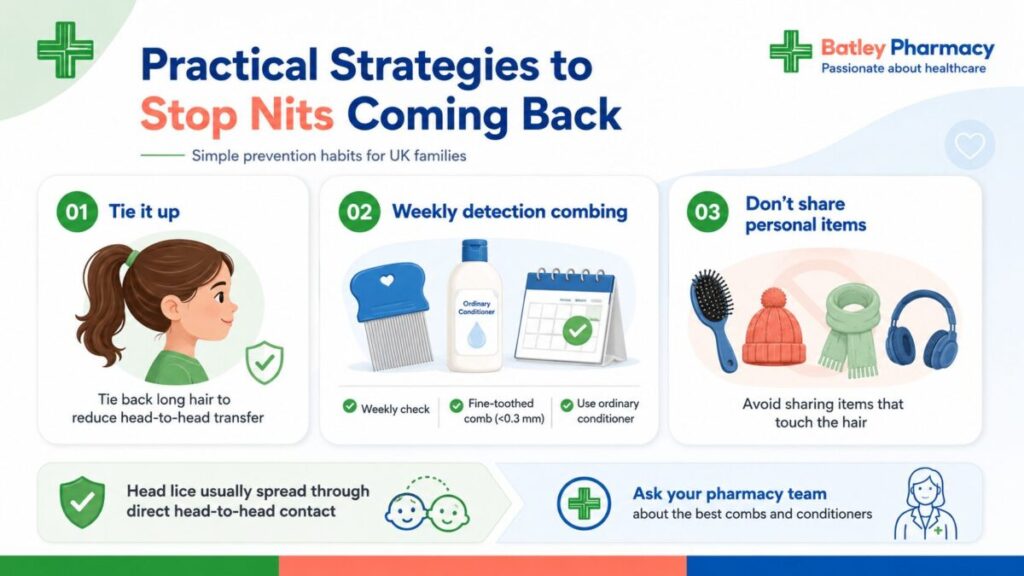
Since head lice cannot jump or fly and only move via direct head-to-head contact, your prevention strategy should focus on physical barriers and routine checks.
1. The “Tie it Up” Rule
Lice “walk” from one hair strand to another during close contact. For children with long hair, keeping it tied back in plaits, ponytails, or buns significantly reduces the surface area available for a louse to grab onto. This is one of the simplest yet most effective nit prevention school UK tips for parents.
2. Routine Detection Combing
The most effective way to “prevent” a full-blown infestation is to catch the first “scout” louse before it starts breeding. Make detection combing a weekly habit, similar to brushing teeth.
- Perform a “weekly check” even if there are no signs of itching.
- Use a fine-toothed detection comb (with tooth spacing less than 0.3mm).
- Apply a generous amount of any ordinary anti-lice conditioner UK families use to make the hair slippery, which stops the lice from moving while you comb.
3. Avoid Sharing Personal Items
While 95% of transmissions occur through head-to-head contact, it is still wise to discourage children from sharing items that touch the hair, such as:
- Brushes and combs.
- Hats, scarves, and hair accessories.
- Headphones.
If you are worried about your family’s general health or are visiting the pharmacy for other needs like travel vaccinations, our team can also provide advice on the best combs and conditioners for your hair type.
Using Prevention Sprays and Conditioners
You may have seen a head lice prevention spray UK in the supermarket or pharmacy aisles. These products often contain natural oils like tea tree, eucalyptus, or rosemary. While these scents may be unappealing to lice, they are not a substitute for combing. They should be viewed as an “extra layer” rather than a primary defense.
At Batley Pharmacy, we recommend focusing on the mechanical removal of lice. If your child’s scalp has become irritated from repeated checks, our Pharmacy First service can offer guidance on managing minor skin irritations without an appointment.
Managing the “Ping-Pong” Effect in Schools
One of the main reasons families struggle to stop nits coming back is that they are being re-infected by untreated close contacts.
- Notify the school: If you find lice, let the school or nursery know so other parents can check their children.
- Check the whole household: If one person has lice, everyone—including adults—should be checked on the same day.
- Concurrent treatment: Everyone with live lice must be treated on the same day to prevent passing them back and forth.
For parents managing a household’s health, we also offer weight loss support and other private clinical services. Keeping everyone healthy and educated about hygiene is part of our local mission.
Why Do Lice Keep Returning?
If it feels like your treatment isn’t working, it may be a “super lice” issue where lice have developed resistance to certain chemicals. In these cases, physical suffocants (like those containing Dimeticone) are usually more effective as they kill lice by smothering them rather than poisoning them.
If you are unsure why you are still seeing live bugs after 17 days of careful combing, it is time to speak to a pharmacist. You might also find our previous guide on head lice back to school season helpful for identifying the early signs of an infestation.
Summing Up
While we cannot truly prevent head lice from ever appearing, we can prevent them from staying. By making detection combing a part of your weekly routine, keeping long hair tied back, and communicating with your school community, you can break the cycle of re-infection.
If you are struggling with a persistent outbreak or need advice on the best products for your family, visit us at Batley Pharmacy. Our team is always here to provide warm, professional, and practical healthcare advice to the Batley community.
FAQs
Can I use a head lice prevention spray UK every day?
Most prevention sprays are designed for daily use during outbreaks. However, they should not replace weekly detection combing, which remains the only reliable way to catch lice early.
Does washing hair daily prevent head lice?
No. Head lice are not a sign of poor hygiene and are just as happy in clean hair as in dirty hair. In fact, they are often easier to catch in clean hair because it is less oily.
Is there an anti-lice conditioner UK parents recommend?
Any thick, white conditioner is excellent for “wet combing”. The conditioner makes the lice lose their grip and stops them from moving, making them easy to sweep up with a nit comb.
Should I wash bedding on a hot wash to prevent re-infection?
The NHS and NICE state that there is no need for extra laundry or hot washes, as lice cannot survive long away from a human scalp. Focus your efforts on the hair itself.
How do I know if my prevention is working?
If you perform a weekly check and find only one or two “scout” lice before they have laid eggs (brown nits), your strategy is successful! You have prevented a full infestation.