
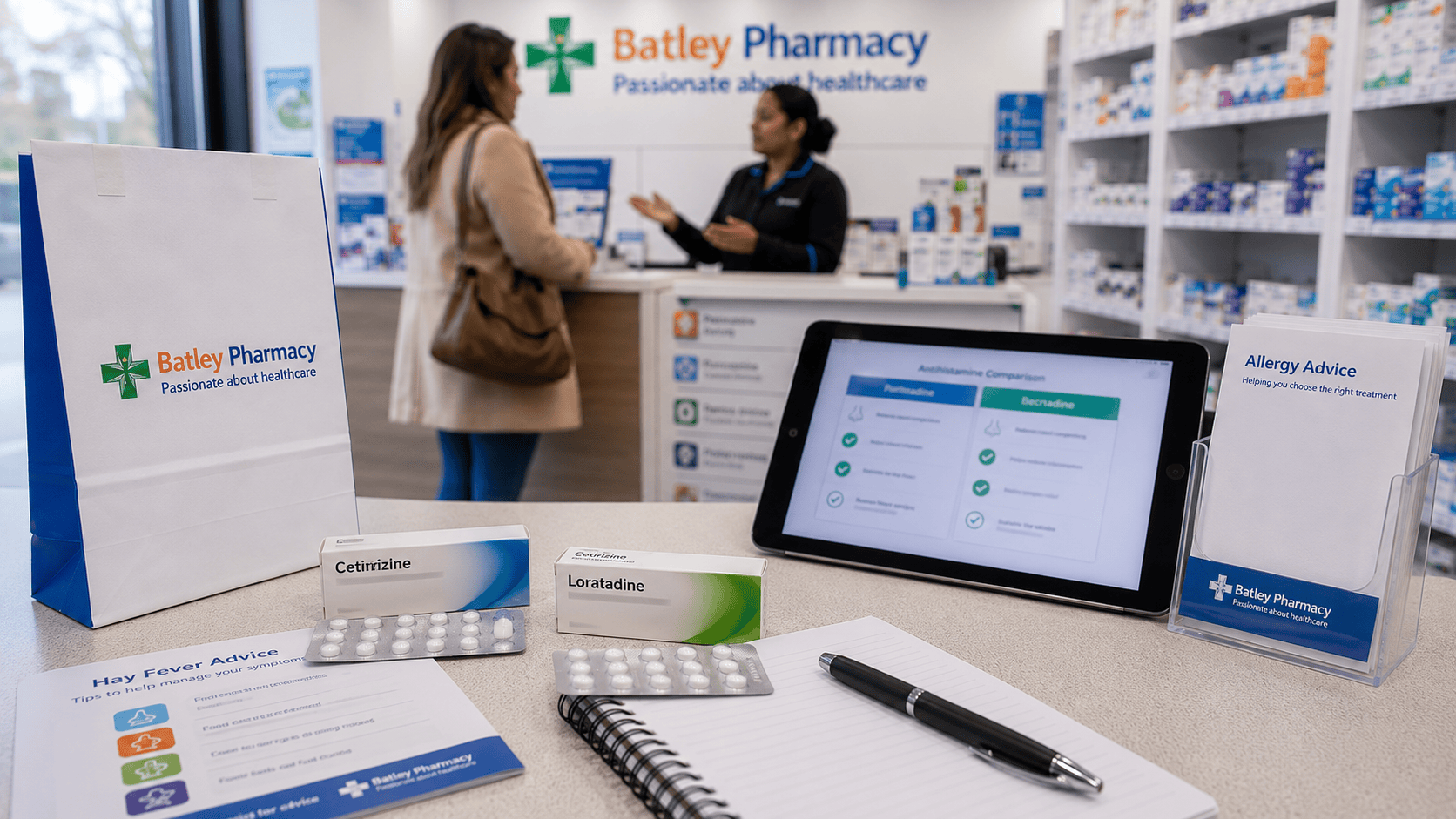
When the pollen count spikes across West Yorkshire, millions of people search for the best antihistamine for allergies to reclaim their day. If you find yourself constantly sneezing, battling watery eyes, or dealing with an itchy throat, you have likely stood in the pharmacy aisle trying to decipher an allergy medicine comparison. Two names dominate the shelves: cetirizine and loratadine.
Both are widely recognized as modern, non-drowsy antihistamine choices, but they are not identical. In this comprehensive antihistamine review 2026, we look closely at the clinical differences, onset speeds, and side-effect profiles of these two household favourites. At Batley Pharmacy, we know that finding the right hay fever medication UK sufferers can rely on is key to enjoying the warmer months. Let’s break down the science to find out which one wins for you.
Key Takeaways
- Cetirizine works incredibly fast, providing symptom relief within 30 to 60 minutes.
- Loratadine offers a lower risk of mild drowsiness, keeping you alert all day.
- Both provide up to 24 hours of reliable, continuous allergy defense.
- They are highly affordable and available over the counter in generic forms.
- The comparison Cetirizine vs loratadine depends heavily on your lifestyle and needs.
- Speak to the Batley Pharmacy team to find your ideal allergy medication.
What Are Second-Generation Antihistamines?
To understand the comparison, it helps to look at how allergy medications have evolved. Older, first-generation antihistamines—such as chlorphenamine (commonly known as Piriton)—are notorious for crossing the blood-brain barrier. This causes significant sedation, which can make driving or working dangerous.
Cetirizine and loratadine are second-generation antihistamines. They were chemically designed to target peripheral histamine receptors in the body rather than the brain, providing highly effective allergy control with a significantly lower risk of making you feel sleepy.
Evaluating Cetirizine Benefits
Cetirizine hydrochloride (often sold under the brand name Zirtek) is a powerful, daily medication celebrated for its rapid response. When you are suffering from acute symptoms, speed is everything.
The Major Advantages of Cetirizine
- Rapid Onset: One of the primary cetirizine benefits is how quickly it gets to work. According to the NHS, many individuals begin experiencing substantial relief from sneezing and itchy eyes within just 30 to 60 minutes of swallowing a tablet.
- Potent Action on Skin Allergies: Clinical experience shows that cetirizine is exceptionally good at suppressing skin-related allergic responses, making it an excellent choice for hives, nettle rash, and insect bites.
- 24-Hour Coverage: A single 10mg dose provides a full day of symptom management.
Evaluating Loratadine Benefits
Loratadine (frequently known by the brand Clarityn) is often described as a beautifully balanced, reliable all-rounder. It is highly favored by individuals who are particularly sensitive to medication side effects.
The Major Advantages of Loratadine
- True Non-Drowsy Profile: While both medications are technically classified as non-drowsy, loratadine benefits from a molecular structure that finds it incredibly difficult to cross the blood-brain barrier. This results in the absolute lowest incidence of daytime fatigue among standard over-the-counter options.
- Fewer Interactions: It generally boasts a highly gentle side-effect profile, making it a very well-tolerated medicine for long-term daily use throughout the high-pollen season.
- Steady, Long-Lasting Relief: Like cetirizine, it delivers 24 hours of continuous protection from a single dose.
Cetirizine vs Loratadine: The Head-to-Head Comparison
When choosing between Cetirizine vs loratadine, your choice should come down to two primary variables: how fast you need it to work, and how sensitive you are to mild sedation.
Onset Speed vs Sedation Risk
While cetirizine wins the race for speed—taking under an hour compared to loratadine’s one to three hours—there is a minor trade-off. Clinical data from the NHS inform guidance on antihistamines highlights that cetirizine is slightly more likely to cause mild drowsiness than loratadine.
Approximately 1 in 10 people taking cetirizine may experience a bit of sleepiness. If you are a commercial driver, operate heavy machinery, or find that cetirizine leaves you feeling slightly groggy, swapping to loratadine is often the perfect clinical solution.
Choosing the Best Antihistamine for Your Lifestyle
Because everyone’s biochemistry is unique, an allergy medicine that works perfectly for your neighbor might not give you the same level of comfort.
- Choose Cetirizine if: You wake up with severe, immediate symptoms, need fast-acting relief before heading outdoors, or are dealing with an itchy skin rash or insect sting.
- Choose Loratadine if: You need to stay completely alert for critical tasks, are over the age of 65 (where drowsiness can increase the risk of falls), or have found that cetirizine makes you feel heavy-eyed.
If you are trying to manage more complex family health logistics alongside seasonal allergies, our team is always ready to support you. Beyond allergy advice, you can access our comprehensive local pharmacy health services for professional clinical guidance.
Read More: Nurofen Plus Safety Warnings: What You Must Know
When to Consult Your Pharmacist
While over-the-counter allergy tablets are exceptionally safe for the vast majority of people, they are still clinical medications. You should speak to a pharmacist before starting either treatment if you:
- Are pregnant, planning a pregnancy, or breastfeeding.
- Have severe liver or kidney disease.
- Are purchasing the medication for a child under the age of two.
For common seasonal health queries, or if you require advice on managing summer ailments, Batley Pharmacy’s Pharmacy First service offers an ideal route to speak directly with a clinician without waiting for a GP appointment.
If you find that your eyes remain red, gritty, and inflamed despite taking daily tablets, we can also recommend targeted secondary treatments. For instance, if you require specialized professional care for secondary head or ear pressure caused by severe sinus congestion, you can learn more about our dedicated ear wax removal clinic.
Furthermore, keeping your family’s routine healthcare up to date is easy with our flu vaccination clinic, helping you build a comprehensive shield against seasonal respiratory issues.
Closing
In the ultimate matchup of Cetirizine vs loratadine, there is no single universal winner. Cetirizine takes the crown for sheer speed and skin allergy relief, while loratadine wins for its superior non-drowsy reliability.
Managing allergies shouldn’t involve endless guesswork. If your current over-the-counter medicine isn’t providing the relief you need, pop into Batley Pharmacy. Our expert team is always on hand to review your symptoms, ensure your treatments are safe, and help you find the absolute best defense to keep you clear, comfortable, and alert all year long.
FAQs
Which is stronger, cetirizine or loratadine?
Neither is technically “stronger” as they are both highly effective, standard-strength second-generation antihistamines. However, cetirizine acts faster (within 60 minutes) and can feel more potent for acute skin itching, while loratadine offers a cleaner non-drowsy profile.
Can I take cetirizine and loratadine together on the same day?
No, you should never take two different oral antihistamines together unless explicitly directed by a doctor. Doubling up on these medications will not improve your allergy relief but will significantly increase your risk of adverse side effects like dry mouth, headaches, and severe drowsiness.
Is it better to take my antihistamine in the morning or at night?
If you are using loratadine, a morning dose keeps you protected all day without causing daytime fatigue. If you are taking cetirizine and find that it makes you feel slightly relaxed or sleepy, taking your daily tablet right before bed allows you to sleep through the peak side-effect window while remaining fully protected the next morning.
Can you buy cheap generic versions of these allergy medicines?
Yes. Both medications are available as affordable unbranded generics that contain the exact same active ingredients as expensive brands like Zirtek or Clarityn. They work just as effectively and often cost a fraction of the price.
Which causes less drowsiness: loratadine or cetirizine?
Both loratadine, such as Claritin, and cetirizine, such as Zyrtec, are considered non-drowsy antihistamines. However, loratadine is generally less likely to make you feel sleepy than cetirizine. Both usually cause much less drowsiness than older antihistamines such as Benadryl.
Is cetirizine or loratadine better during pregnancy?
Both loratadine and cetirizine are commonly considered suitable antihistamines during pregnancy when taken at the recommended dose. Neither medicine is clearly better than the other. However, loratadine has been studied for longer and may be less likely to cause drowsiness. Always speak to your doctor, pharmacist, or midwife before taking any medicine during pregnancy.
Can I switch from cetirizine to loratadine?
Yes, you can usually switch from cetirizine to loratadine. Do not take both medicines at the same time unless a healthcare professional tells you to, as this may increase side effects such as sleepiness, headaches, or a dry mouth. You can normally take loratadine about 24 hours after your last dose of cetirizine.