
| TL;DR Confused about NHS earwax removal 2026? While many GP surgeries no longer offer syringing, you can still find safe, professional care. Discover your options and private treatments at Batley Pharmacy. |
If you have ever experienced the muffled hearing, ringing, or discomfort of blocked ears, you know how vital quick relief can be. However, for many residents in Batley and across West Yorkshire, a common question has surfaced: “Can I get earwax removed on NHS 2026?” The landscape of hearing health has changed significantly over the last few years, leaving many patients feeling frustrated when their local surgery can no longer help.
At Batley Pharmacy, we see patients daily who are confused about why earwax removal GP UK services seem to have vanished. In this guide, we will break down the current state of NHS provision, why traditional methods have changed, and how you can access safe, professional treatment to restore your hearing and comfort.
The Current State of NHS Earwax Removal 2026
As of 2026, the availability of earwax removal on the NHS is no longer a “given” service at your local GP surgery. While the NHS technically remains responsible for hearing health, the way they deliver it has shifted. Most GP practices are no longer contractually required to provide earwax removal as a core service.
This means that if you call your doctor today, you might be told that NHS ear syringing discontinued in their clinic. Instead, patients are often advised to manage the wax at home with olive oil drops or are referred to a community audiology hub, which can often come with a long waiting list.
Why is it Harder to Get NHS Treatment?
The shift away from GP-led ear cleaning isn’t just about budgets; it is also about safety and efficacy. Traditional “syringing” involved blasting water into the ear canal, which carried a small but significant risk of eardrum perforation or infection. Modern techniques like microsuction are safer, but they require specialist equipment and training that many GP surgeries simply do not have the resources to maintain.
What Happened to Ear Syringing?
You may remember the days when a practice nurse would use a large metal syringe to flush out your ears. Today, you will find that NHS ear syringing has been discontinued in favour of safer methods. The modern alternative used in specialist clinics is either electronic irrigation or microsuction.
Electronic irrigation uses a controlled, low-pressure stream of water, which is much gentler than the old manual syringes. However, even this is being phased out in many areas in favour of microsuction, which uses a gentle vacuum to remove wax without using any water at all. Because these methods require more time and expensive technology, they have largely moved out of the GP surgery and into pharmacies and private hearing centres.
Your Options: Home Care vs. Professional Help
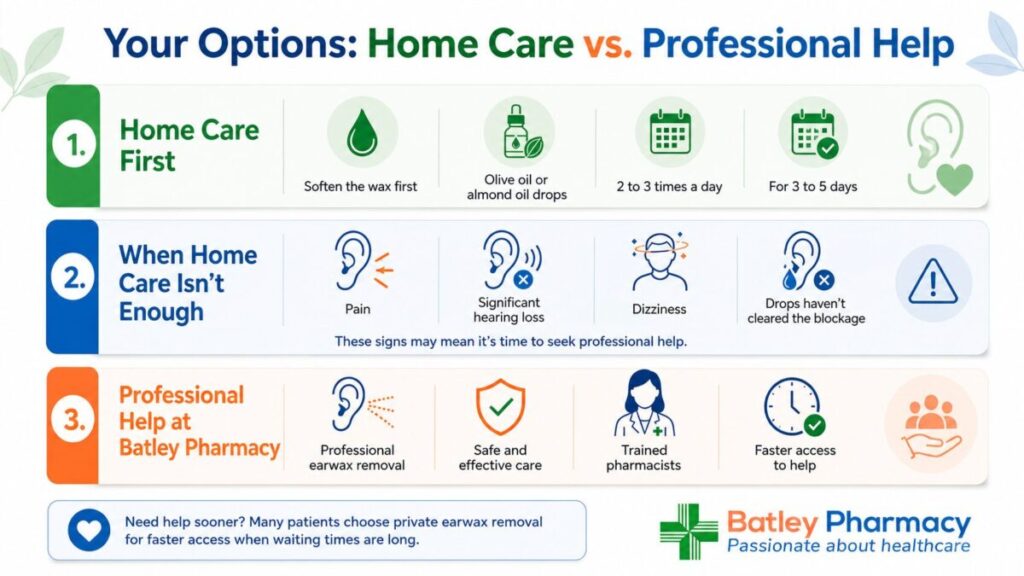
If you suspect you have a blockage, the first step is always to try softening the wax. The NHS guidance on earwax build-up recommends using olive oil or almond oil drops 2 to 3 times a day for about 3 to 5 days.
When Home Care Isn’t Enough
For many, drops alone won’t clear a stubborn plug. If you are experiencing pain, significant hearing loss, or dizziness, it is time to seek professional intervention. Since waiting for an NHS audiology appointment can take weeks or even months, many patients are now looking for private earwax removal cost UK details to get seen faster.
At Batley Pharmacy, we provide a professional earwax removal service that bypasses the long wait times. Our pharmacists are trained in the latest techniques to ensure your ears are cleared safely and effectively.
Why Choose a Batley Pharmacy for Earwax Removal?
With GP access becoming more restricted, pharmacies have stepped up to become the “front door” of the NHS. Choosing a child ear wax removal pharmacy or an adult clinic like ours offers several benefits:
- Speed: You can often book an appointment within days, rather than months.
- Expertise: Our clinicians use professional-grade otoscopes to examine your ear canal before and after treatment.
- Convenience: Located in the heart of Batley, we are easily accessible for local residents.
Beyond ear care, our Pharmacy First service allows us to help with various minor ailments, ensuring you get the right care without needing a doctor’s note for every concern.
Understanding Private Earwax Removal Cost UK
Because NHS provision is so patchy, “private” care has become the standard for those who need immediate relief. In 2026, the private earwax removal cost UK generally ranges between £40 and £80, depending on whether one or both ears need treating.
While there is a cost involved, many patients find the immediate restoration of their hearing and the prevention of further complications—like painful ear infections—to be well worth the investment. We pride ourselves on offering competitive, transparent pricing for the Batley community.
Is Microsuction Better Than Irrigation?
When looking for earwax removal children UK parents often prefer microsuction because it is quick and dry. For adults, both microsuction and irrigation are effective, but microsuction is widely considered the safest method for those with a history of eardrum issues or narrow ear canals.
At our clinic, we assess each patient individually. We don’t just “clear the wax”—we look at the overall health of your ear. This holistic approach is why we are a trusted choice for NHS and private healthcare services in the region.
Safety First: When to See a GP Instead
While we can clear most blockages, certain symptoms mean you should contact your earwax removal GP UK or NHS 111 immediately. Please do not book a routine cleaning if you experience:
- Fluid or blood leaking from your ear.
- Severe, stabbing pain.
- Sudden, total hearing loss in one ear.
- Fever and general malaise accompanying ear pain.
These can be signs of an infection or a perforated eardrum that requires medical diagnosis. For more general advice on staying healthy, you can also check our guide on flu and COVID vaccinations to protect your family year-round.
How to Prevent Earwax Build-up
Once your ears are clear, you’ll want to keep them that way.
- Stop using cotton buds: They act like a ramrod, pushing wax further into the “dead end” of the ear canal.
- Regular drops: If you are prone to dry wax, using olive oil drops once a week can help the ear’s natural self-cleaning process.
- Ear protection: If you swim regularly, consider earplugs to prevent water from trapping wax and causing “swimmer’s ear.”
Conclusion
While the answer to “NHS earwax removal 2026” is complicated, your path to clear hearing doesn’t have to be. Although your GP might no longer offer syringing, professional help is closer than you think. By choosing a trusted local provider like Batley Pharmacy, you can enjoy safe, effective, and rapid relief from blocked ears.
Don’t live with muffled hearing or discomfort. Speak to the Batley Pharmacy team today or visit us in-store to learn more about our ear care and other health services. We are here to keep Batley hearing clearly.
FAQs
Can I still get my ears syringed at my GP surgery?
Most GP surgeries have stopped offering ear syringing due to safety concerns and changes in NHS funding. You will likely be advised to manage it at home or seek a private provider.
How much does private earwax removal cost in Batley?
Costs can vary, but typically you can expect to pay between £40 and £70. Contact Batley Pharmacy for our current rates and to book an assessment.
Is microsuction painful?
No, microsuction is generally not painful. It can be a little noisy and feel slightly cold, but it is a quick and highly effective way to remove wax without the use of water.
How long does an earwax removal appointment take?
Most appointments are completed within 20 to 30 minutes. This includes a consultation, a visual check of your ears, and the removal process itself.
Can I use hydrogen peroxide to clear my ears?
You should be very cautious with chemical drops. The NICE guidelines generally recommend medicinal grade olive oil as the safest first-line treatment.