
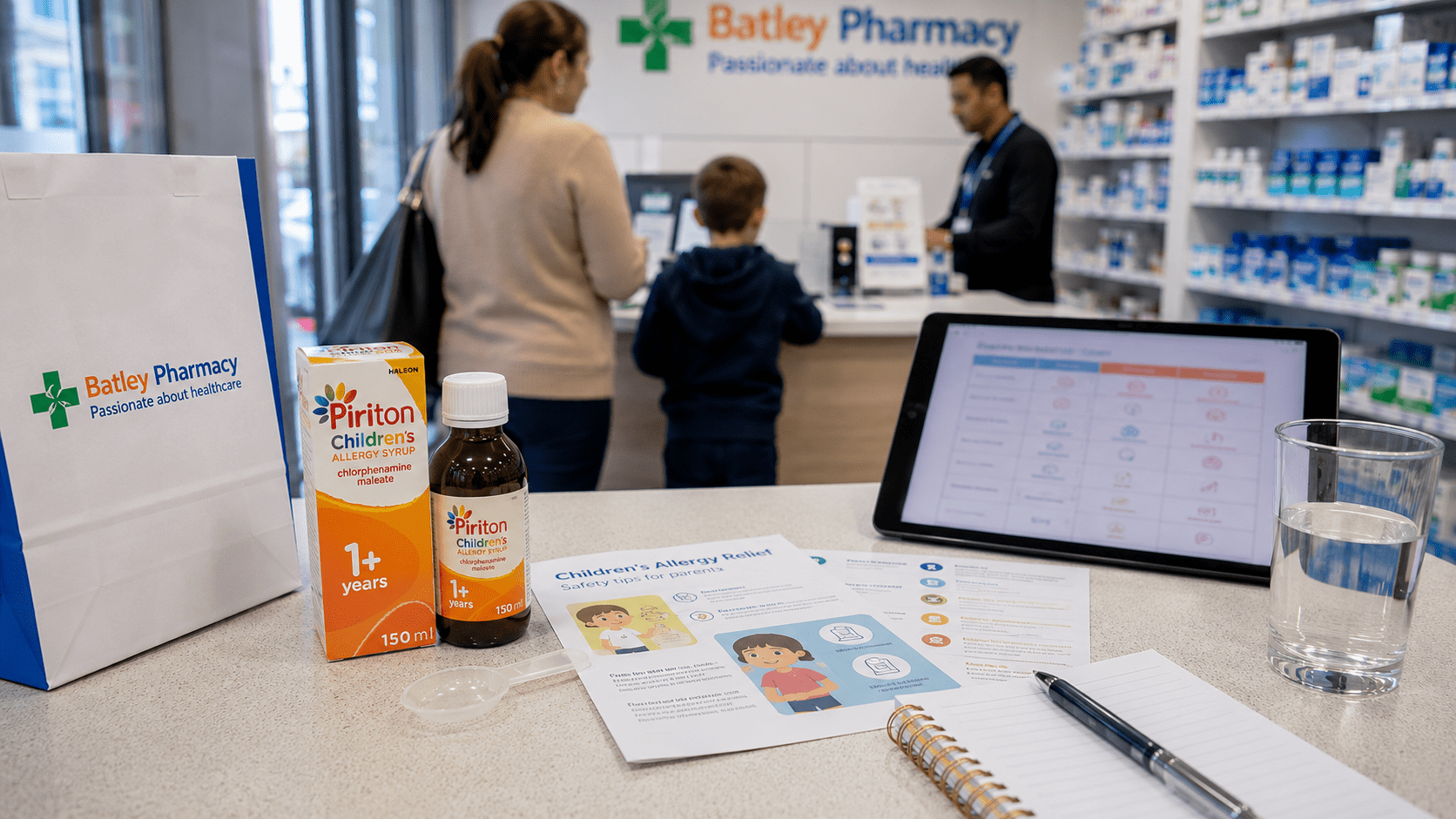
Dealing with a child suffering from an unexpected allergic attack can be stressful for any parent in West Yorkshire. Whether it is the sudden onset of itchy, watery eyes during hay fever season, an intense reaction to an insect bite after a day playing in the park, or the relentless itch of chickenpox, finding a fast and reliable solution is a priority. When looking for effective allergy relief for kids, many families turn to a trusted household name: Piriton syrup for children.
This liquid medication has been a staple in British family medicine cabinets for generations. However, because it belongs to an older class of medicines, it requires careful attention to detail regarding age limits, measurement, and potential drowsiness. At Batley Pharmacy, we believe that empowering parents with clear, accurate information is vital for safe childhood healthcare. This comprehensive guide will walk you through the essential facts about chlorphenamine syrup, helping you manage your child’s symptoms safely and confidently.
Key Takeaways
- Piriton syrup for children provides fast allergy relief.
- It contains chlorphenamine, a trusted sedating antihistamine.
- Follow our guide for proper age-based dosages.
- Understand potential side effects like child drowsiness.
- Avoid giving this syrup to infants under one.
- Read on for essential parent safety tips from Batley Pharmacy’s clinical team today.
Understanding Chlorphenamine Syrup and How It Works
Piriton syrup for children contains the active ingredient chlorphenamine maleate. This substance is a first-generation sedating antihistamine for children. When your child comes into contact with an allergen, such as pollen, pet dander, or dust mites, their immune system releases a chemical called histamine. Histamine is responsible for causing the classic symptoms of an allergic reaction, including a runny nose, sneezing, hives, skin rashes, and prickly heat.
By blocking the effects of histamine, chlorphenamine syrup quickly reduces these distressing symptoms. Because it is a liquid, it is absorbed rapidly by the body, often providing noticeable relief within thirty to sixty minutes. This makes it an invaluable option for acute flare-ups, such as a sudden reaction to food or an insect sting.
The Essential Piriton Age Guide
One of the most critical safety aspects of managing children’s medication is verifying the child’s age before administration. The official Piriton age guide states that this syrup is suitable for children aged one year and older.
You must never give over-the-counter Piriton syrup to a baby under twelve months old unless it has been specifically prescribed by a doctor. Infants under one year old process medicines differently, and giving them an antihistamine without medical supervision carries significant health risks. Furthermore, you should not give children under six years old any cough or cold medicines that contain chlorphenamine if they are mixed with other active ingredients, as multi-symptom cold remedies are not recommended for young children.
Correct Piriton Dosage for Children
To achieve the best results while prioritizing safety, you must adhere strictly to the recommended Piriton dosage for children. Liquid medicines should always be measured using the double-ended measuring spoon or oral syringe provided in the packaging. Never use a standard kitchen teaspoon, as these vary in size and can lead to an accidental underdose or a dangerous overdose.
The standard dosage guidelines based on age are as follows:
- For children aged 1 to 2 years old, the dose is one small 2.5ml spoonful given twice a day. The maximum daily dose is 5ml in any twenty-four-hour period.
- For children aged 2 to 6 years old, the dose is one small 2.5ml spoonful every 4 to 6 hours as needed. The maximum daily dose is 15ml in any twenty-four-hour period.
- For children aged 6 to 12 years old, the dose is one large 5ml spoonful every 4 to 6 hours as needed. The maximum daily dose is 30ml in any twenty-four-hour period.
- For adolescents over 12 years old and adults, the dose is two large 5ml spoonfuls (totaling 10ml) every 4 to 6 hours as needed. The maximum daily dose is 60ml.
Always ensure there is a minimum of four hours between individual doses for children aged two and older. If you accidentally miss a dose and your child still needs it, give it as soon as you remember, unless it is nearly time for the next scheduled dose. Never double the dose to make up for a forgotten one.
Read More: Nurofen Plus Safety Warnings: What You Must Know Before Taking It
Managing Piriton Side Effects and Safety Tips
Like all medications, this children’s allergy medicine can cause side effects, though not every child will experience them. Being aware of these effects allows you to manage them appropriately.
The most common of all Piriton side effects is drowsiness and sedation. Because chlorphenamine enters the brain readily, it frequently makes children feel sleepy or sluggish. For this reason, many parents prefer to administer the dose in the evening, especially if the allergy symptoms or a chickenpox rash are keeping the child awake at night. If your child attends preschool or school, it is a good idea to inform their teacher that they have taken a sedating antihistamine so they can monitor their energy levels.
Interestingly, some children experience the exact opposite effect, known as paradoxical excitation. Instead of becoming sleepy, they may become unusually restless, hyperactive, or excitable. Other potential side effects include a dry mouth, blurred vision, headaches, or mild stomach upset.
If you notice your child has taken too much syrup or shows signs of severe agitation, confusion, or rapid heartbeat, seek urgent medical attention immediately by calling NHS 111 or visiting the nearest accident and emergency department.
When to Consult Your Local Pharmacist?
While Piriton syrup is an excellent short-term tool for allergy relief for kids, it should not be used continuously for more than two weeks without consulting a healthcare professional. If your child’s allergy symptoms persist beyond this timeframe, or if they suffer from chronic conditions like asthma or liver problems, professional guidance is necessary.
At Batley Pharmacy, we offer a dedicated environment where you can discuss your family’s health needs without an appointment. If your child is struggling with seasonal allergies, you can utilize the Batley Pharmacy’s Pharmacy First service can help with selected minor health conditions to get rapid advice. Our team can evaluate whether a non-drowsy alternative might be more appropriate for school hours.
We provide comprehensive healthcare services at Batley Pharmacy to keep the whole community protected. While managing childhood allergies, you can also ensure your family is up to date with essential immunizations by booking flu vaccinations through our clinical team. If you are preparing for a family trip abroad, don’t forget to check our specialized services alongside our helpful head lice back to school season guide to keep your little ones healthy and prepared for any situation.
Summing Up
Piriton syrup for children remains a highly effective and fast-acting option for managing acute allergic reactions and childhood rashes. By following the precise age guides, utilizing the correct measuring tools, and remaining aware of the sedating effects of chlorphenamine, you can navigate allergy season safely.
If you need help selecting the right allergy relief or have questions about childhood dosages, please contact the experts at Batley Pharmacy. Visit our local clinic in Batley for friendly, expert guidance on all your family healthcare needs.
FAQs
What should I do if my child is sick after taking Piriton syrup?
If your child vomits less than thirty minutes after swallowing the dose, you can give them the same dose again. However, if they are sick more than thirty minutes after taking it, do not give an extra dose. Wait until the next scheduled time to avoid an accidental overdose.
Can Piriton syrup be given alongside paracetamol or ibuprofen?
Yes, it is generally safe to give paracetamol or ibuprofen alongside chlorphenamine syrup, provided your child has no underlying conditions that forbid those pain reliefs. Always check the labels carefully to ensure none of the other medicines contain an active antihistamine.
Is Piriton syrup suitable for daily use during the summer?
While it can be used daily for hay fever, it is an older, sedating medicine. For daily, long-term summer use, modern non-drowsy antihistamines are often preferred for children. Speak to the Batley Pharmacy team for a personalized recommendation.
Can an older child take Piriton tablets instead of the syrup?
Yes, Piriton allergy tablets are suitable for children aged six years and older. For children between six and twelve, the dose is half a tablet every four to six hours. The syrup remains a popular choice because it is easier to measure and swallow.