
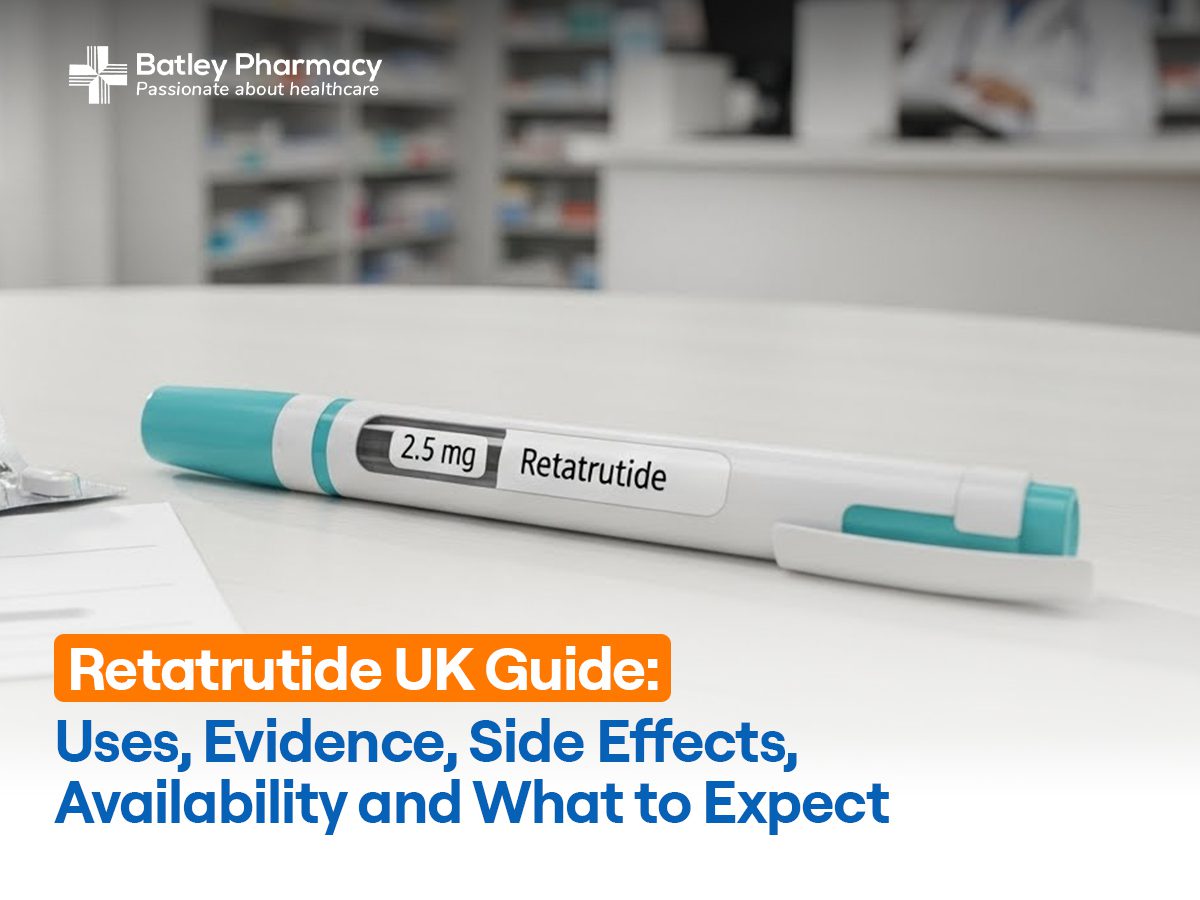
Retatrutide has quickly become one of the most talked-about emerging weight loss treatments. Early clinical trials show unprecedented results, with participants achieving higher average weight loss than reported with semaglutide or tirzepatide. As interest grows, many people in the UK want to understand what Retatrutide is, how it works, its availability, and how it compares to current weight loss medications.
This detailed guide explains the expected benefits, risks, and what patients in the UK should know before considering future treatment options.
What Is Retatrutide?
Retatrutide is a once weekly injectable medication developed by Eli Lilly. It is designed as a triple agonist that activates GIP, GLP-1, and glucagon receptors. This multi receptor approach is intended to increase satiety, reduce appetite, improve blood sugar control, and stimulate energy expenditure. These combined effects make Retatrutide one of the most promising potential treatments for obesity and metabolic disease.
Retatrutide is currently not licensed in the UK or anywhere globally. It is still undergoing clinical trials, but the results from Phase 2 studies have already gained international attention for demonstrating record weight reduction outcomes.
How Does Retatrutide Work?
Retatrutide targets three metabolic pathways.
1. GIP agonism
Supports insulin response, improves blood sugar control, and helps regulate appetite.
2. GLP1 agonism
Slows gastric emptying, promotes satiety, reduces appetite, and lowers blood glucose. This is the same pathway used in semaglutide, liraglutide, and tirzepatide.
3. Glucagon receptor activation
Increases energy expenditure and fat burning potential, supporting additional weight loss.
This triple mechanism creates a combined metabolic effect that is broader than current single or dual pathway weight loss medications.
Clinical Trial Evidence for Retatrutide
The most widely referenced data comes from a Phase 2 trial published in the New England Journal of Medicine in 2023.
Key findings from the Phase 2 Randomised Controlled Trial:
- Adults with obesity receiving the highest 12 mg dose lost an average of 24.2 percent body weight at 48 weeks.
- Some participants achieved over 30 percent weight loss.
- Weight loss was still ongoing at week 48, suggesting potential for even greater results with longer treatment.
- Significant reductions in waist circumference, blood pressure, triglycerides, and fasting glucose were observed.
These outcomes exceed the results seen in Phase 3 trials for semaglutide 2.4 mg (Wegovy) and tirzepatide 15 mg (Mounjaro).
Latest Phase 3 Evidence for Retatrutide: TRIUMPH-2
Further Phase 3 evidence was announced by Eli Lilly in July 2026 from the TRIUMPH-2 trial, which evaluated retatrutide in adults with obesity or overweight and type 2 diabetes.
Key findings from the TRIUMPH-2 Phase 3 Trial:
- Participants receiving 12 mg retatrutide lost an average of 20.8% body weight at 80 weeks.
- The 9 mg dose achieved 19.1% average weight loss, while 4 mg achieved 12.7%.
- Placebo participants lost an average of 4.0% body weight.
- HbA1c levels fell by up to 1.6 percentage points, showing significant improvements in blood glucose control.
- Gastrointestinal side effects such as diarrhoea, nausea, constipation and vomiting were the most commonly reported adverse events.
These findings provide new Phase 3 evidence that retatrutide may produce substantial weight loss even in people with type 2 diabetes, a group that can experience greater difficulty losing weight.
TRIUMPH-3: Retatrutide in Severe Obesity and Cardiovascular Disease
TRIUMPH-3 investigated retatrutide in adults with severe obesity and established cardiovascular disease, with or without type 2 diabetes. The Phase 3 results were also announced in July 2026.
Key findings from the TRIUMPH-3 Phase 3 Trial:
- Participants receiving 12 mg retatrutide lost an average of 22.6% body weight at 80 weeks.
- The 9 mg dose produced 21.6% average weight loss.
- Participants receiving placebo lost an average of 3.2%.
- The highest dose reduced waist circumference by an average of 19 cm.
- Triglycerides decreased by 37.0%, while non-HDL cholesterol fell by 16.5%.
- Systolic blood pressure decreased by an average of 9.3 mmHg.
- High-sensitivity C-reactive protein (hsCRP), a marker associated with inflammation, fell by 51.2%.
These results suggest that retatrutide may influence not only body weight but also several cardiometabolic risk markers. However, TRIUMPH-3 did not establish a definitive reduction in cardiovascular events, as the number of events was relatively small and confidence intervals remained wide.
Retatrutide UK Availability: When Will It Be Available
Retatrutide is not currently available in the UK through private clinics, the NHS, online pharmacies, or prescription services. It is still under investigation and has not yet entered Phase 3 obesity trials in the UK.
Projected timelines from industry analysts suggest:
- Regulatory submissions to the MHRA may occur after successful completion.
- Estimated earliest availability in the UK could be between 2027 and 2028, depending on approval speed.
These timelines can change based on safety data, trial outcomes, and regulatory decisions. Batley Pharmacy offers weight loss treatments with in-person consultation and guidance on lifestyle tips.
Retatrutide Dosage: What We Know So Far
Although dosing may evolve in later trials, current study protocols include:
- Weekly injectable doses starting at 1 mg or 2 mg
- Gradual titration over several months
- Higher doses such as 8 mg and 12 mg producing the most significant weight loss results
The long titration schedule is designed to improve tolerability, similar to semaglutide and tirzepatide protocols.
Actual prescribing guidelines will only be available once the medication is approved.
Retatrutide vs Tirzepatide: How Do They Compare
Tirzepatide, branded as Mounjaro, is the closest approved medication to Retatrutide in terms of mechanism. Here is how they differ.
Mechanism
Retatrutide: Triple receptor agonist targeting GIP, GLP1, and glucagon.
Tirzepatide: Dual receptor agonist targeting GIP and GLP1 only.
Clinical Effectiveness
- Retatrutide Phase 2 trials: up to 24 percent weight loss at 48 weeks.
- Tirzepatide SURMOUNT 1 trial: up to 22.5 percent weight loss at 72 weeks.
Some metabolic markers improve even more strongly with Retatrutide due to glucagon receptor activity.
Appetite and Metabolic Effects
Retatrutide may support greater energy expenditure compared with tirzepatide.
Availability
Tirzepatide is already approved in multiple countries and expected to expand UK access.
Retatrutide remains investigational.
For patients in the UK seeking weight loss support now, tirzepatide and semaglutide remain the current evidence based options while Retatrutide continues development.
Expected Benefits of Retatrutide
Based on early evidence, potential benefits may include:
- Significant weight loss beyond existing GLP1 medications
- Improved appetite control
- Better metabolic health markers
- Potential benefits for prediabetes or type 2 diabetes
- Enhanced energy expenditure due to glucagon activity
- Once weekly dosing
Final benefits will only be confirmed after Phase 3 trials.
Retatrutide Side Effects
Side effects reported in Phase 2 trials include:
- Nausea
- Vomiting
- Diarrhoea
- Constipation
- Decreased appetite
- Injection site reactions
- Fatigue
- Mild increases in heart rate
- Gastrointestinal discomfort during dose escalation
Most side effects align with GLP1 and GIP agonist profiles.
Some participants reported elevations in liver enzymes at higher doses, and this will be monitored closely in upcoming trials.
Serious side effects were rare but longer studies are required to fully understand long term risks.
Who Might Be Suitable for Retatrutide in the Future
If approved, eligibility may resemble criteria for current weight loss injectables.
Individuals with:
- BMI of 30 or above
- BMI of 27 or above with a weight related condition
- Insulin resistance or prediabetes
- Obesity related metabolic risks
However, formal prescribing guidelines will only be issued after licensing.
Retatrutide at Batley Pharmacy
Batley Pharmacy currently offers approved weight loss treatments including semaglutide and tirzepatide based services. Once Retatrutide is licensed, pharmacies like ours may be able to offer consultations and private treatment options.
For now, patients can explore existing safe, regulated weight management options that are already available in the UK.