
| TL;DR Understanding the different types of earwax UK residents experience is key to clear hearing. Discover how soft vs hard earwax removal methods differ and when to seek professional pharmacy care. |
Have you ever wondered why your earwax looks different from time to time? Perhaps it is usually light and sticky, but recently it has become dark, firm, and difficult to manage. Understanding the various types of earwax UK patients encounter is more than just a matter of curiosity; the consistency and colour of your earwax can significantly impact how easy it is to remove and which treatments will be most effective.
At Batley Pharmacy, we see many patients who are frustrated by a “blocked” feeling in their ears. Often, they have tried home remedies that worked in the past but are currently failing. This is usually because the consistency of the wax has changed. Whether you are dealing with a lifelong buildup or a sudden change in earwax consistency treatment UK options, our expert team is here to guide you through the safest path to clear ears.
Wet vs Dry Earwax UK: The Genetic Connection
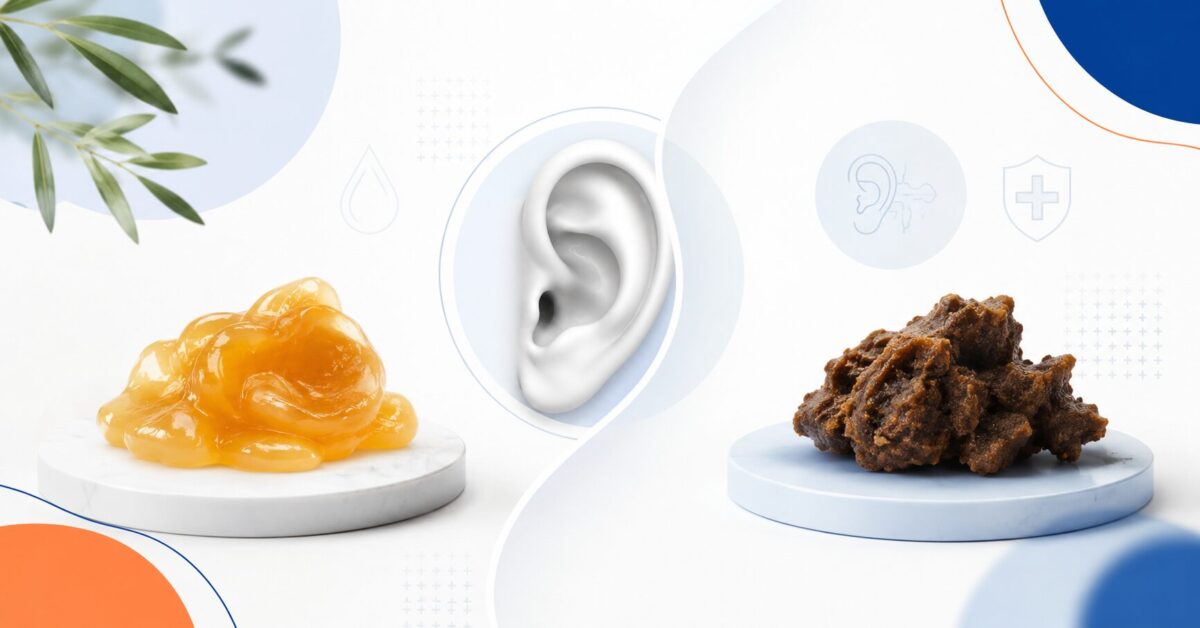
Broadly speaking, there are two main biological categories of earwax: wet and dry. In the UK, the vast majority of the population has “wet” earwax, which is typically sticky and varies in colour from yellow to dark brown. “Dry” earwax, which is often grey and flaky, is less common in Western Europe and is largely determined by your genetics.
Understanding the wet vs dry earwax UK distinction is important because dry wax is often more prone to becoming impacted. Because it lacks the moisture and “stickiness” of wet wax, it does not migrate out of the ear canal as easily. If you have dry wax, you may find that you need to be more proactive with preventative care to avoid blockages.
Soft vs Hard Earwax Removal: Why Texture Matters
The texture of your earwax, whether it is currently soft or has hardened into a solid plug, is the most critical factor in determining your removal options.
Managing Soft Earwax
Soft earwax is generally easier for the body to expel naturally. It is the result of “fresh” wax production combined with adequate hydration of the skin in the ear canal. If your wax is soft, you might only notice it when it reaches the outer ear.
For soft wax, the NHS advice on earwax suggests that the body can usually handle it without intervention. However, if it starts to build up, gentle olive oil drops are often all that is needed to encourage it to slide out.
The Challenge of Hard Earwax
Hard earwax occurs when wax stays in the ear canal for too long. Over time, the moisture evaporates, leaving behind a dense, concentrated mass of skin cells and secretions. Hard wax can become “impacted,” meaning it is stuck firmly against the walls of the ear canal or even pushed against the eardrum.
When it comes to soft vs hard earwax removal, hard wax almost always requires a two-step process. First, it must be chemically softened using clinical-grade oils or drops for several days. Trying to remove hard wax through suction or irrigation without softening it first can be uncomfortable and less successful.
Read More: Swimmer’s Ear (Otitis Externa): Symptoms, Treatment and Prevention
Earwax Colour Meaning UK: What Your Wax is Telling You
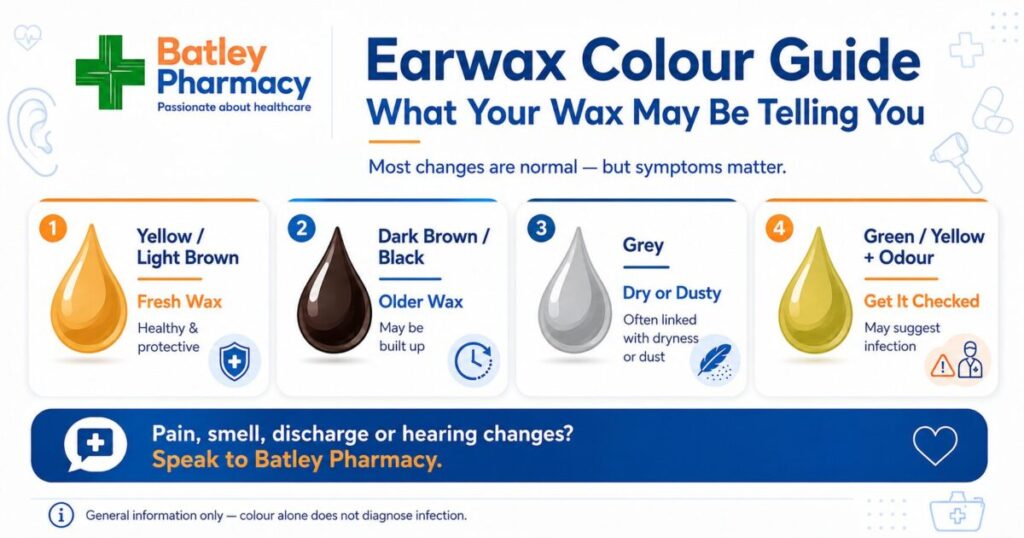
The colour of your earwax can provide clues about its age and the health of your ear canal. While we shouldn’t obsess over it, knowing the earwax colour meaning UK standards can help you decide when to visit a professional.
- Yellow/Light Brown: This is usually “new” wax. It is healthy, sticky, and doing its job of protecting your ear.
- Dark Brown/Black: This is “old” wax. The darker the colour, the longer it has been in the ear. It has trapped more dust and debris and is more likely to be firm.
- Grey: Often associated with dry earwax types or sometimes dust buildup.
- Green/Yellow with Odour: This is a red flag. It may indicate an ear infection rather than a simple wax blockage.
If you notice a change in colour accompanied by pain, our Pharmacy First service can provide an assessment for ear infections and other minor ailments, ensuring you get the right treatment quickly.
Earwax Consistency Treatment UK: Finding the Right Solution
Choosing the right earwax consistency treatment UK depends entirely on the current state of your blockage. At Batley Pharmacy, we tailor our advice based on what we see during an ear examination.
1. Softening Agents (The Essential First Step)
Regardless of the type, we almost always recommend starting with olive oil or almond oil drops. These work by soaking into the wax, increasing its volume slightly and making it “mushy.” This makes professional removal much safer and more comfortable.
2. Professional Microsuction
For hard, stubborn wax, microsuction is often the preferred method. It uses a gentle medical vacuum to hoover the wax out. Because it doesn’t use water, it is a “dry” procedure, making it suitable for those with perforated eardrums or narrow ear canals. You can learn more about this on our dedicated ear wax removal page.
3. Avoiding “The Cotton Bud Trap”
Many people attempt to solve a consistency issue by using cotton buds. This is the worst thing you can do. It pushes the wax deeper, turning a soft, manageable buildup into a hard, impacted plug. It can also damage the delicate skin of the ear canal, leading to infections.
Local Care for Batley Residents
Ear health is a vital part of your overall well-being. If you are struggling with your hearing or feel a persistent “fullness” in your ear, don’t wait for it to become painful. We provide a range of private and NHS health services designed to support our local community.
Maintaining clear ears is especially important during the colder months when we are more prone to upper respiratory issues that can affect ear pressure. While you are visiting us for ear care, it is also a great time to ensure your family is protected with our flu and COVID vaccination services.
Read More: Earwax Removal at Home vs Pharmacy: What Is Safe and What Is Not?
Summing Up
Whether your earwax is wet, dry, soft, or hard, the key to healthy ears is patience and the right technique. By understanding the types of earwax UK residents have and choosing the appropriate soft vs hard earwax removal approach, you can maintain your hearing and avoid the discomfort of impaction.
If you are in the Batley area and are worried about a blockage, come and see us. Our team can perform a quick check and recommend the best softening products or professional services to get your hearing back to its best. At Batley Pharmacy, we are your partners in local, professional healthcare.
FAQs
Why is my earwax suddenly hard and dark?
Earwax hardens when it remains in the ear for an extended period. The dark colour is caused by the oxidation of the wax and the accumulation of trapped dust. It is a sign that the natural migration process has slowed down.
Can I use hydrogen peroxide to soften hard wax?
While some over-the-counter drops contain urea hydrogen peroxide, you should use them with caution. According to NICE guidelines, olive oil is the safest starting point for softening wax. Hydrogen peroxide can sometimes irritate the sensitive skin of the ear canal if used too frequently.
How long does it take for olive oil to soften hard wax?
We usually recommend using 2-3 drops twice a day for at least 5 to 7 days before attempting professional removal. This ensures the wax is soft enough to be removed easily without causing trauma to the ear canal.
Why does my ear feel more blocked after using drops?
This is a common and actually “good” sign. As the oil is absorbed, the wax expands slightly before it breaks down. This expansion can temporarily close the remaining gap in your hearing, but it means the treatment is working.
Should I be worried if I have no earwax?
Not necessarily. Some people produce very little wax. However, a completely dry ear canal can be itchy and prone to infection. If your ears feel excessively dry or sore, speak to a pharmacist.